

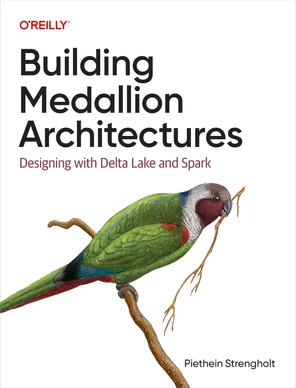
Book Building Medallion Architectures
To deliver the insights that give them a competitive advantage, organizations increasingly turn to the proven Medallion architecture. Yet implementing a robust data architecture can be difficult, particularly when it comes to using the Medallion architecture's Bronze, Silver, and Gold layers—done wrong, it can hamper your ability to make data-driven decisions. This practical guide helps you build a Medallion architecture the right way with Azure Databricks and Microsoft Fabric. Drawing on hands-on experience from the field, Piethein Strengholt demystifies common assumptions and complex problems you'll face when embarking on a new data architecture. Architects and engineers of all stripes will find answers to the most typical questions along with insights from real organizations about what's worked, what hasn't, and why. You'll learn: Learn how to build a Medallion architecture with Azure Databricks and Microsoft Fabric Gain insights from three real case studies that illustrate practical field experience and lessons learned Explore scaling considerations, including governance, security, generative AI, and more Make informed decisions when designing or implementing new data architectures Get proven patterns for success that align with broader organizational objectives
Book preface
Before you start, a short look at what you will learn in this book
In the preface, settle the general questions you have at a glance, so your view widens and your choice is more informed. Questions such as: Why was this book written and what problem does it solve? Who can use the book? A summary of the chapters and the learning goals of each part? The important changes and new improvements added across editions, and so on — we cover all of these for you.
Target audience
Data Architects and Engineers: This book is specifically designed for data architects and engineers who are responsible for designing, implementing, and managing data architectures. It provides practical guidance and solutions to common challenges faced in the field. The content helps them build robust and scalable Medallion architectures.
Professionals using Azure Databricks and Microsoft Fabric: Individuals working with or planning to implement data solutions on Azure Databricks and Microsoft Fabric will find this guide invaluable. It offers detailed instructions and best practices for leveraging these platforms to construct Medallion architectures effectively. The book bridges the gap between theoretical understanding and practical application.
Organizations seeking competitive advantage through data: Business leaders and technical managers looking to harness data for competitive advantage will benefit from understanding the Medallion architecture. The book explains how a well-implemented data architecture can drive data-driven decisions and align with broader organizational objectives. It provides strategic insights for long-term data success.
Anyone interested in the future of data architectures: Readers curious about the evolution of data architectures, including the integration of generative AI and advanced governance models, will find relevant discussions. The book provides a forward-looking perspective on how Medallion architectures will adapt to emerging technologies. It helps prepare for future challenges and opportunities in the data landscape.
Why the book was written
Many organizations struggle with implementing robust data architectures, especially with the Medallion architecture's layers. This book provides a clear path to building it correctly with modern tools. It addresses common assumptions and complex problems encountered in the field.
The book aims to demystify the Medallion architecture, offering practical solutions and insights from real-world experiences. It helps architects and engineers navigate the complexities of data management and make informed decisions. The content is grounded in hands-on experience, making it highly relevant for practitioners.
It covers the evolution of data architectures, foundational preconditions, and a thorough exploration of the Medallion layers (Bronze, Silver, Gold). This historical and theoretical context ensures readers understand the 'why' behind modern data systems. It prepares them for practical applications discussed later.
The guide provides proven patterns for success that align with broader organizational objectives, including scaling, governance, and security. It also looks into the future of Medallion architectures, especially concerning generative AI. This forward-looking perspective helps organizations build sustainable and future-proof data environments.
Content overview
This book serves as a comprehensive guide for implementing Medallion architectures, offering a clear roadmap for building robust data systems. It effectively bridges the gap between theoretical concepts and practical application, making complex topics accessible to a wide range of professionals. The detailed explanations of Bronze, Silver, and Gold layers are particularly valuable.
The inclusion of real-world case studies provides invaluable context and practical lessons learned from various organizations. These examples illustrate the adaptability and effectiveness of the Medallion model across different industries, offering readers actionable insights. The book's focus on hands-on experience with Azure Databricks and Microsoft Fabric is a significant strength.
The guide excels in addressing critical considerations such as scaling, governance, and security within Medallion architectures. It also explores the integration of emerging technologies like generative AI, preparing readers for future challenges and opportunities. This holistic approach ensures that practitioners can build sustainable and future-proof data environments.
Piethein Strengholt's expertise shines through in demystifying complex data architecture problems and offering clear, actionable solutions. The book is well-structured, guiding readers from foundational concepts to advanced applications and real-world scenarios. It is an essential resource for anyone looking to master Medallion architectures and enhance their data strategy.
Published
Reading time
11:36
Book type
Subscription
Participants
Be the first
Last updated
Nov 16, 2026