

Book Designing AI Interfaces
Designing AI Interfaces is a practical, design-first guide for product teams building with large language models and autonomous systems. As artificial intelligence becomes central to modern product design, UX professionals must adapt their toolkits to meet new demands. In Designing AI Interfaces, senior product designer Louise Macfadyen offers a timely, practice-oriented guide for building intuitive, ethical, and effective user experiences with large language models (LLMs) and autonomous AI systems. From content moderation to interruptibility, this book presents actionable design patterns for today's most advanced AI interactions—with clear technical insights to help designers understand how AI systems process inputs, generate outputs, and make decisions on users' behalf.
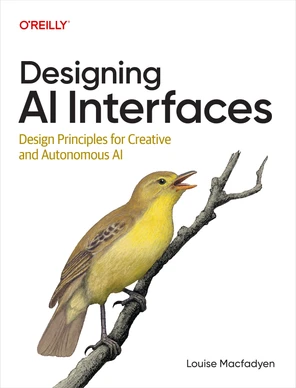
Book preface
Before you start, a short look at what you will learn in this book
In the preface, settle the general questions you have at a glance, so your view widens and your choice is more informed. Questions such as: Why was this book written and what problem does it solve? Who can use the book? A summary of the chapters and the learning goals of each part? The important changes and new improvements added across editions, and so on — we cover all of these for you.
Target audience
Product designers looking to upgrade their skills in the AI domain. This book is highly useful for those who want to work with large language models.
UX professionals responsible for designing interfaces for autonomous AI systems. This book helps them understand the complexities of this field.
Product managers who want to implement ethical and transparent design strategies in their AI products. This book provides the necessary guidance for risk management.
Developers and software engineers who want to collaborate with designers to create better user experiences. This book establishes a common language between technical and design teams.
Why the book was written
This book is written to bridge the gap between traditional product design and the emerging needs of the AI world. By learning these patterns, designers can create more effective user experiences for large language models.
Providing actionable strategies for managing risk and transparency in AI systems is a primary goal of this work. The book helps designers foster user trust in increasingly agentic systems.
The book helps designers gain fluency in key AI concepts to collaborate more effectively with engineering teams. This technical knowledge is essential for aligning design with the actual capabilities of models.
The work addresses the challenges of human-AI interaction and provides design patterns for steering AI responses. This approach allows users to influence outputs in real time.
Content overview
This book is a practical and essential guide for any product designer working with AI. The author successfully translates technical complexities into understandable design patterns.
Louise Macfadyen offers unique insights based on her experiences at major companies. The book's content is completely up-to-date and tailored to the needs of today's industry.
The book's focus on ethics and transparency in AI design distinguishes it from other resources. It is a valuable resource for building responsible products.
The book's structure, organized by input, computation, and output, makes learning concepts very easy. This approach helps designers build a correct mental model of AI.
Published
Reading time
06:28
Book type
Subscription
Participants
Be the first
Last updated
Oct 7, 2026