

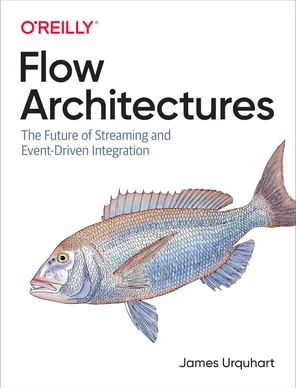
Book Flow Architectures
Software development today is embracing events and streaming data, which optimizes not only how technology interacts but also how businesses integrate with one another to meet customer needs. This phenomenon, called flow, consists of patterns and standards that determine which activity and related data is communicated between parties over the internet. This book explores critical implications of that evolution: What happens when events and data streams help you discover new activity sources to enhance existing businesses or drive new markets? What technologies and architectural patterns can position your company for opportunities enabled by flow? James Urquhart, global field CTO at VMware, guides enterprise architects, software developers, and product managers through the process. * Learn the benefits of flow dynamics when businesses, governments, and other institutions integrate via events and data streams * Understand the value chain for flow integration through Wardley mapping visualization and promise theory modeling * Walk through basic concepts behind today's event-driven systems marketplace * Learn how today's integration patterns will influence the real-time events flow in the future * Explore why companies should architect and build software today to take advantage of flow in coming years
Book preface
Before you start, a short look at what you will learn in this book
In the preface, settle the general questions you have at a glance, so your view widens and your choice is more informed. Questions such as: Why was this book written and what problem does it solve? Who can use the book? A summary of the chapters and the learning goals of each part? The important changes and new improvements added across editions, and so on — we cover all of these for you.
Target audience
Enterprise architects will find this book invaluable for designing future-proof systems that leverage event-driven and streaming data. It offers insights into architectural patterns and technologies that support flow dynamics. The book helps in strategically positioning their organizations for emerging opportunities.
Software developers can use this resource to deepen their understanding of event-driven architectures and real-time data processing. It covers basic concepts behind today's streaming market and future integration patterns. This knowledge is crucial for building scalable and responsive applications in a flow-centric world.
Product managers will benefit from learning how flow architectures can enhance customer experience and drive innovation. The book explains the business implications of integrating via events and data streams. It helps in identifying new market opportunities and developing products that align with the evolving data landscape.
Professionals interested in digital transformation and modern integration strategies will find this book highly relevant. It explores how businesses, governments, and institutions can integrate more effectively to meet customer needs. The content provides a roadmap for adopting timely data usage and understanding the importance of flow networks.
Why the book was written
This book is essential for understanding the paradigm shift towards event-driven architectures and streaming data in modern software development. It explains how this "flow" phenomenon optimizes technological interactions and business integrations. Readers will gain insights into leveraging these dynamics for competitive advantage.
It provides a comprehensive guide for enterprise architects, software developers, and product managers to navigate the complexities of flow architectures. The book helps identify critical implications of this evolution, such as discovering new activity sources and enhancing existing business models. It offers practical guidance on positioning companies for future opportunities.
The content explores the business case for flow adoption, detailing drivers like improving customer experience, organizational efficiency, and fostering innovation. It also addresses the enablers and requirements for successful flow implementation. This makes it valuable for strategic decision-makers looking to modernize their systems.
The book introduces powerful analytical tools like Wardley mapping and promise theory to model and understand the flow value chain. These visualizations help in establishing scope, identifying user needs, and mapping integration components. It provides a structured approach to building robust flow integration strategies.
Content overview
This book offers a timely and insightful exploration of flow architectures, a critical evolution in software development. It effectively bridges the gap between technical concepts and business strategy, making it accessible to a broad audience. The comprehensive coverage of event-driven systems and streaming data is particularly commendable.
The author, James Urquhart, provides a clear and compelling argument for embracing flow dynamics, supported by practical examples and theoretical frameworks. The inclusion of Wardley mapping and promise theory for visualizing value chains is a standout feature. It equips readers with powerful tools for strategic analysis.
The book meticulously examines the current streaming market and anticipates future trends, offering valuable foresight for architects and developers. It highlights the challenges and opportunities associated with real-time event flow. This makes it an essential read for anyone looking to stay ahead in the rapidly changing landscape of data integration.
"Flow Architectures" is praised for its ability to guide readers through the process of architecting and building software for a flow future. It emphasizes the importance of timely data and the impact of flow networks on business models. The book serves as a practical blueprint for innovation and efficiency in the digital age.
Published
Reading time
07:49
Book type
Subscription
Participants
1 readers
Last updated
Oct 11, 2026