

Book Fundamentals of DevOps and Software Delivery
This book is a guide to DevOps and software delivery: that is, a guide to the numerous tools and techniques that are required to take that application code and run it and maintain it in production, where it can generate value for your users and your company on an ongoing basis. This includes going through all the modern practices for deploying applications and microservices to the cloud, managing your infrastructure as code, automating your software delivery lifecycle in a CI/CD pipeline, configuring networking, setting up data stores, and hooking up monitoring.
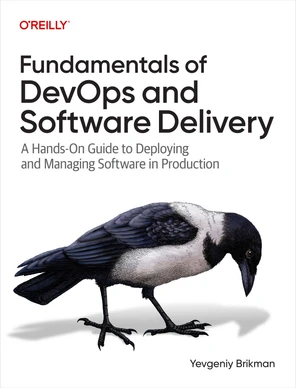
Book preface
Before you start, a short look at what you will learn in this book
In the preface, settle the general questions you have at a glance, so your view widens and your choice is more informed. Questions such as: Why was this book written and what problem does it solve? Who can use the book? A summary of the chapters and the learning goals of each part? The important changes and new improvements added across editions, and so on — we cover all of these for you.
Target audience
Software engineers who want to take control of their deployment pipelines will find this book invaluable. It guides them through running and maintaining applications in production environments. This knowledge helps them become more self-sufficient and productive.
System administrators transitioning to DevOps roles can use this guide to modernize their skills. It covers modern cloud practices, infrastructure as code, and container orchestration. This transition is essential for managing modern cloud-native infrastructures.
Technical leaders and architects looking to establish robust software delivery practices in their organizations will benefit from the strategic comparisons. The book provides clear trade-offs between different deployment, orchestration, and storage options. This helps them make informed architectural decisions.
Operations engineers who need to scale and secure their infrastructure will find deep dives into networking and data storage. The book explains complex topics like Zero Trust Architecture and distributed databases in an accessible way. This enables them to build more resilient and secure production systems.
Why the book was written
Modern software development requires developers to understand how their code runs in production. This book bridges the gap between writing code and operating it at scale. It provides a comprehensive roadmap for mastering the entire software delivery lifecycle.
The DevOps landscape is filled with fragmented tools and confusing terminology. This guide consolidates these concepts into a structured, easy-to-follow learning path. It helps teams avoid common pitfalls when adopting infrastructure as code and automation.
Security and reliability are often treated as afterthoughts in software delivery. This book emphasizes building secure-by-default systems from the ground up. It teaches readers how to implement robust networking, cryptography, and monitoring practices.
Hands-on experience is crucial for mastering DevOps tools. The book contains numerous practical examples using industry-standard technologies like AWS, Kubernetes, and OpenTofu. This ensures that readers can immediately apply what they learn to real-world projects.
Content overview
The book stands out for its exceptionally clear and structured approach to complex DevOps concepts. It avoids unnecessary jargon and focuses on practical, real-world utility. This makes it an excellent reference guide for both beginners and experienced professionals.
By providing step-by-step examples using modern tools like OpenTofu and Kubernetes, the author ensures the content remains highly relevant. The hands-on tutorials are easy to follow and directly applicable to production environments. It effectively bridges the gap between theory and practice.
The comprehensive coverage of production operations, including networking, security, and monitoring, is highly commendable. It does not just stop at deployment but teaches how to keep systems running reliably. This holistic view of software delivery is rare and highly valuable.
The objective comparisons between different tools and architectures help readers understand the trade-offs involved. Rather than promoting a single tool, the author explains when and why to use each option. This balanced perspective is crucial for making sound engineering decisions.
11 chapters in production
Reading time
14:57
Book type
Subscription
Participants
Be the first
Last updated
Sep 30, 2026