

Scaling Your RAG Stack
Moving from a prototype to a production-grade system is where the real engineering begins. You have successfully built a RAG pipeline that works on a handful of documents, but now you face the reality of enterprise scale: millions of pages, inconsistent data, and the constant threat of model hallucinations. This chapter bridges the gap between a functional experiment and a robust, reliable service that handles real-world complexity without buckling under pressure. Scaling a RAG architecture requires moving beyond simple retrieval. When you handle massive document volumes, you must implement sophisticated data ingestion pipelines that manage index freshness and handle large, complex files through intelligent splitting. Without these, your system becomes a bottleneck of stale information and memory errors. Think of this like a library: as the collection grows, you need a cataloging system that updates in real-time, rather than a single librarian trying to remember every book on the shelf. Retrieval itself must evolve into a two-stage pipeline. By combining hybrid search—which balances vector-based semantic understanding with keyword-based precision—with a reranking step, you ensure that the most relevant information reaches the LLM. This is the difference between a broad search and a surgical strike. Furthermore, as you scale, cost management becomes critical; you must optimize your token usage and infrastructure to ensure that high-quality responses don't break your budget. Security and reliability are non-negotiable at scale. You must implement guardrails to prevent prompt injection and actively manage hallucinations. By distinguishing between LLM-intrinsic errors and RAG-specific retrieval failures, you can build detection and correction loops that verify facts against source chunks. Finally, a great user experience—incorporating multimodal interfaces and clear citation paths—is what transforms a backend utility into a product users trust. | Strategy | Benefit | Trade-off | | :--- | :--- | :--- | | Hybrid Search | High recall and precision | Increased query complexity | | Reranking | Superior relevance | Higher latency | | Guardrails | Enhanced safety | Added processing overhead | [ ] Implement a two-stage retrieval pipeline with reranking. [ ] Establish automated document refresh cycles for index freshness. [ ] Configure guardrails to detect and block prompt injection. [ ] Build a hallucination correction loop using source citations. [ ] Optimize ingestion pipelines for large, multi-format documents.
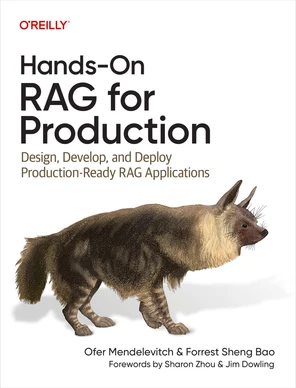
Chapter 3 of Hands-On RAG for Production: Scaling Your RAG Stack
About this chapter
Before you start, take a quick look at what this chapter covers
Before you enter the flashcards, read this summary so your mind is ready and you know exactly what to expect. When you know what problem this chapter solves and why it matters, learning is deeper and faster. Here you see which concepts the chapter covers, how it is structured and how it relates to the other chapters. With this mental preparation, flashcards are no longer memorizing — they are understanding. Your brain sees the connections, not just the words.
Moving from a prototype to a production-grade system is where the real engineering begins. You have successfully built a RAG pipeline that works on a handful of documents, but now you face the reality of enterprise scale: millions of pages, inconsistent data, and the constant threat of model hallucinations. This chapter bridges the gap between a functional experiment and a robust, reliable service that handles real-world complexity without buckling under pressure.
Scaling a RAG architecture requires moving beyond simple retrieval. When you handle massive document volumes, you must implement sophisticated data ingestion pipelines that manage index freshness and handle large, complex files through intelligent splitting. Without these, your system becomes a bottleneck of stale information and memory errors. Think of this like a library: as the collection grows, you need a cataloging system that updates in real-time, rather than a single librarian trying to remember every book on the shelf.
Retrieval itself must evolve into a two-stage pipeline. By combining hybrid search—which balances vector-based semantic understanding with keyword-based precision—with a reranking step, you ensure that the most relevant information reaches the LLM. This is the difference between a broad search and a surgical strike. Furthermore, as you scale, cost management becomes critical; you must optimize your token usage and infrastructure to ensure that high-quality responses don't break your budget.
Security and reliability are non-negotiable at scale. You must implement guardrails to prevent prompt injection and actively manage hallucinations. By distinguishing between LLM-intrinsic errors and RAG-specific retrieval failures, you can build detection and correction loops that verify facts against source chunks. Finally, a great user experience—incorporating multimodal interfaces and clear citation paths—is what transforms a backend utility into a product users trust.
| Strategy | Benefit | Trade-off |
|---|---|---|
| Hybrid Search | High recall and precision | Increased query complexity |
| Reranking | Superior relevance | Higher latency |
| Guardrails | Enhanced safety | Added processing overhead |
- Implement a two-stage retrieval pipeline with reranking.
- Establish automated document refresh cycles for index freshness.
- Configure guardrails to detect and block prompt injection.
- Build a hallucination correction loop using source citations.
- Optimize ingestion pipelines for large, multi-format documents.