

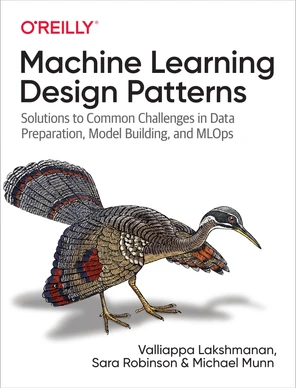
Book Machine Learning Design Patterns
The design patterns in this book capture best practices and solutions to recurring problems in machine learning. The authors, three Google engineers, catalog proven methods to help data scientists tackle common problems throughout the ML process. These design patterns codify the experience of hundreds of experts into straightforward, approachable advice. In this book, you will find detailed explanations of 30 patterns for data and problem representation, operationalization, repeatability, reproducibility, flexibility, explainability, and fairness. Each pattern includes a description of the problem, a variety of potential solutions, and recommendations for choosing the best technique for your situation.
Book preface
Before you start, a short look at what you will learn in this book
In the preface, settle the general questions you have at a glance, so your view widens and your choice is more informed. Questions such as: Why was this book written and what problem does it solve? Who can use the book? A summary of the chapters and the learning goals of each part? The important changes and new improvements added across editions, and so on — we cover all of these for you.
Target audience
Data scientists looking to improve their model development processes.
Machine learning engineers responsible for deploying and maintaining AI systems.
Software architects who intend to design scalable intelligent systems.
Technical teams wanting to leverage Google experts' experience to reduce common errors.
Why the book was written
This book aims to standardize methods for solving common problems in machine learning projects.
The authors have codified their practical experience at Google into usable patterns for other professionals.
This work addresses the gap between machine learning theories and large-scale operational implementations.
Providing structured solutions for challenges like reproducibility and fairness is a primary goal of the book.
Content overview
By providing 30 practical patterns, this book offers a comprehensive guide for managing the machine learning model lifecycle.
The emphasis on operational aspects and resiliency makes this work a valuable resource for engineers.
The book's structure allows the reader to quickly find the appropriate solution for their specific problem.
Combining theoretical knowledge with practical recommendations distinguishes this book from other educational resources.
Published
Reading time
11:53
Book type
Subscription
Participants
Be the first
Last updated
Oct 7, 2026