

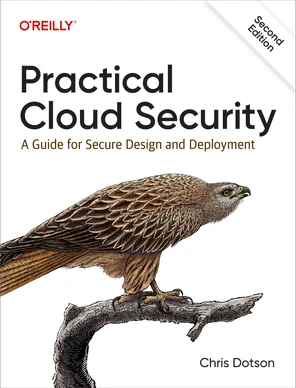
Book Practical Cloud Security, 2nd Edition
With rapidly changing architecture and API-driven automation, cloud platforms come with unique security challenges and opportunities. In this updated second edition, you'll examine security best practices for multivendor cloud environments, whether your company plans to move legacy on-premises projects to the cloud or build a new infrastructure from the ground up. Developers, IT architects, and security professionals will learn cloud-specific techniques for securing popular cloud platforms such as Amazon Web Services, Microsoft Azure, and IBM Cloud. IBM Distinguished Engineer Chris Dotson shows you how to establish data asset management, identity and access management (IAM), vulnerability management, network security, and incident response in your cloud environment. * Learn the latest threats and challenges in the cloud security space * Manage cloud providers that store or process data or deliver administrative control * Learn how standard principles and concepts—such as least privilege and defense in depth—apply in the cloud * Understand the critical role played by IAM in the cloud * Use best tactics for detecting, responding, and recovering from the most common security incidents * Manage various types of vulnerabilities, especially those common in multicloud or hybrid cloud architectures * Examine privileged access management in cloud environments
Book preface
Before you start, a short look at what you will learn in this book
In the preface, settle the general questions you have at a glance, so your view widens and your choice is more informed. Questions such as: Why was this book written and what problem does it solve? Who can use the book? A summary of the chapters and the learning goals of each part? The important changes and new improvements added across editions, and so on — we cover all of these for you.
Target audience
This book is ideal for developers who need to integrate security into their cloud-native applications and deployments. It provides them with the foundational knowledge of cloud security principles and practical techniques to build secure software.
Understanding these concepts helps prevent common vulnerabilities from the outset.
IT architects will find this resource invaluable for designing secure cloud infrastructures and migrating legacy systems. It offers insights into managing cloud providers, establishing robust IAM, and implementing network security across diverse cloud platforms.
The book supports the creation of resilient and compliant cloud architectures.
Security professionals are a primary audience, as the book addresses advanced topics like vulnerability management, incident response, and privileged access management in cloud environments. It helps them refine their strategies for detecting and mitigating threats specific to cloud platforms.
The content enhances their ability to protect critical cloud assets.
Anyone involved in cloud adoption or migration projects will benefit from this book, whether moving on-premises projects to the cloud or building new infrastructure. It provides a holistic view of cloud security challenges and opportunities, offering practical guidance for securing multi-vendor cloud environments.
This makes it relevant for a broad range of cloud practitioners.
Why the book was written
This book is essential for understanding the evolving landscape of cloud security, addressing the unique challenges posed by rapidly changing architectures and API-driven automation. It provides a comprehensive guide for securing diverse cloud platforms, including AWS, Azure, and IBM Cloud.
The content is designed to equip professionals with the knowledge needed to protect cloud environments effectively.
It offers practical, cloud-specific techniques for establishing robust security controls, such as data asset management, identity and access management (IAM), and vulnerability management. The book helps readers navigate the complexities of securing data, identities, and infrastructure in multi-vendor cloud setups.
It bridges the gap between traditional IT security and modern cloud paradigms.
The second edition incorporates the latest threats and challenges in the cloud security space, ensuring that readers are up-to-date with current risks and mitigation strategies. It emphasizes the application of standard security principles like least privilege and defense in depth within cloud contexts.
This update makes it highly relevant for today's dynamic cloud security landscape.
The book provides actionable insights into network security and incident response, offering best tactics for detecting, responding to, and recovering from common security incidents. It guides readers through managing various types of vulnerabilities, particularly those prevalent in multicloud or hybrid cloud architectures.
This practical approach helps build resilient cloud security postures.
Content overview
This book serves as a comprehensive guide to practical cloud security, offering up-to-date insights into securing modern cloud platforms. It effectively addresses the complexities of multi-vendor environments and API-driven automation, making it a highly relevant resource for today's IT landscape.
The content is well-structured, covering foundational principles to advanced incident response.
The second edition is particularly valuable for its focus on latest threats and challenges, ensuring that readers are equipped with current knowledge to combat evolving cyber risks. It provides actionable strategies for data asset management, IAM, and vulnerability management, which are critical components of any robust cloud security posture.
The practical examples enhance understanding and application.
It excels in explaining how standard security principles, such as least privilege and defense in depth, translate into cloud-specific contexts. The book's detailed coverage of network security and incident response provides a clear roadmap for detecting, responding to, and recovering from security breaches.
This makes it a vital tool for maintaining operational resilience.
Authored by an IBM Distinguished Engineer, the content offers expert-level insights into securing major cloud platforms like AWS, Azure, and IBM Cloud. The inclusion of privileged access management and strategies for multicloud/hybrid cloud vulnerabilities makes it a comprehensive resource for advanced practitioners.
It is a highly recommended read for anyone serious about cloud security.
Published
Reading time
06:47
Book type
Subscription
Participants
Be the first
Last updated
Oct 7, 2026