

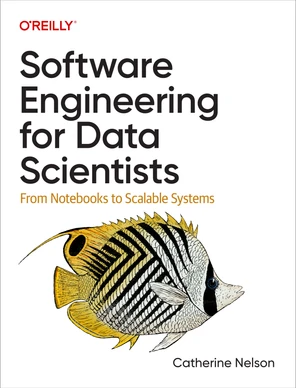
Book Software Engineering for Data Scientists
Data science happens in code. The ability to write reproducible, robust, scaleable code is key to a data science project's success—and is absolutely essential for those working with production code. This practical book bridges the gap between data science and software engineering, and clearly explains how to apply the best practices from software engineering to data science. Examples are provided in Python, drawn from popular packages such as NumPy and pandas. If you want to write better data science code, this guide covers the essential topics that are often missing from introductory data science or coding classes.
Book overview
A look at the structure and key facts of the book

Publication date
April 16, 2024

Edition
1 edition

Total chapters
15 chapters

Total pages
260 pages

Level
Intermediate to advanced

Data science happens in code. The ability to write reproducible, robust, scaleable code is key to a data science project's success—and is absolutely essential for those working with production code. This practical book bridges the gap between data science and software engineering, and clearly explains how to apply the best practices from software engineering to data science.
Examples are provided in Python, drawn from popular packages such as NumPy and pandas. If you want to write better data science code, this guide covers the essential topics that are often missing from introductory data science or coding classes.
Browse this section to get a quick overall picture of the book's content.
Professional Coding Principles
This section focuses on the importance of simplicity, readability, and modularity in coding. The author explains how to write maintainable code through proper naming standards and documentation. This approach includes:
- Avoiding code duplication (DRY).
- Adhering to coding standards.
- Improving overall system performance.
Operationalization and Deployment
This section covers the transition from research environments like notebooks to production systems. Key topics include automation, using containers (Docker), and deploying APIs in cloud environments. These topics help data scientists:
- Convert projects into scalable scripts.
- Utilize CI/CD tools.
- Ensure code security in production environments.
The authors behind this book are among the most prominent experts and pioneers of their field. Their work is the result of years of hands-on experience, deep research and collaboration with the world's largest technology organizations and companies.Each of these authors, through specialist books and articles, has played an important role in shaping and advancing technical knowledge worldwide.

Comments
Readers' experience with this book - comments from buyers and other users
15 chapters in production
Reading time
06:22
Book type
Subscription
Participants
Be the first
Last updated
Sep 30, 2026