
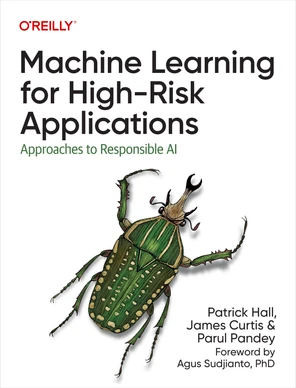
کتاب یادگیری ماشین برای کاربردهای پرخطر
در دهه گذشته، فناوریهای هوش مصنوعی و یادگیری ماشین (AI/ML) به طور گستردهای پذیرفته شدهاند. با این حال، فقدان نظارت در پیادهسازیهای گسترده آنها منجر به حوادث و نتایج زیانباری شده است که میتوانستند با مدیریت ریسک مناسب از آنها جلوگیری شود. پیش از آنکه بتوانیم به مزایای واقعی هوش مصنوعی دست یابیم، متخصصان باید بیاموزند که چگونه ریسکهای آن را کاهش دهند. این کتاب رویکردهایی را برای هوش مصنوعی مسئولانه (Responsible AI) توصیف میکند؛ چارچوبی جامع برای بهبود فناوری، فرآیندهای تجاری و شایستگیهای فرهنگی که بر پایه بهترین تجربیات در زمینه مدیریت ریسک (Risk Management)، امنیت سایبری، حریم خصوصی دادهها و علوم اجتماعی کاربردی بنا شده است. نویسندگان این راهنما را برای دانشمندان دادهای تدوین کردهاند که قصد دارند نتایج سیستمهای هوش مصنوعی را برای سازمانها، مصرفکنندگان و عموم مردم بهبود بخشند.
اشتراکی
فصل های کتاب
با مرور فصلها، ساختار ، محتوای کتاب را به سرعت بشناسید.
با مرور فصلهای این کتاب میتونی خیلی سریع بفهمی هر بخش چی یاد میده، ساختار کلی چطوره و از کجا باید شروع کنی. هر فصل روی یک مفهوم یا مهارت خاص تمرکز داره و موضوعات اصلیش رو میبینی تا انتخابت آگاهانهتر باشه. چه بخوای کل کتاب رو دنبال کنی، چه فقط یک بخش خاص رو دنبال کنی، این نما کمکت میکنه مسیرت رو پیدا کنی.
نظریهها و کاربردهای عملی مدیریت ریسک هوش مصنوعی
این بخش به بررسی مبانی نظری و چارچوبهای عملی برای مدیریت ریسک در سیستمهای هوش مصنوعی میپردازد. تمرکز اصلی بر درک چشمانداز قانونی، فرهنگ سازمانی و فرآیندهای فنی لازم برای کاهش خطرات است.
مدیریت ریسک یادگیری ماشین معاصر
A Snapshot of the Legal and Regulatory Landscape • The Proposed EU AI Act • US Federal Laws and Regulations • State and Municipal Laws • Basic Product Liability • Federal Trade Commission Enforcement • Authoritative Best Practices • AI Incidents • Cultural Competencies for Machine Learning Risk Management • Organizational Accountability • Culture of Effective Challenge • Diverse and Experienced Teams • Drinking Our Own Champagne • Moving Fast and Breaking Things • Organizational Processes for Machine Learning Risk Management • Forecasting Failure Modes • Model Risk Management Processes • Beyond Model Risk Management • Case Study: The Rise and Fall of Zillow’s iBuying • Fallout • Lessons Learned • Resources
درحال تولید...
یادگیری ماشین تفسیرپذیر و توضیحپذیر
Important Ideas for Interpretability and Explainability • Explainable Models • Additive Models • Decision Trees • An Ecosystem of Explainable Machine Learning Models • Post Hoc Explanation • Feature Attribution and Importance • Surrogate Models • Plots of Model Performance • Cluster Profiling • Stubborn Difficulties of Post Hoc Explanation in Practice • Pairing Explainable Models and Post Hoc Explanation • Case Study: Graded by Algorithm • Resources
درحال تولید...
دیباگ کردن سیستمهای یادگیری ماشین برای ایمنی و عملکرد
Training • Reproducibility • Data Quality • Model Specification for Real-World Outcomes • Model Debugging • Software Testing • Traditional Model Assessment • Common Machine Learning Bugs • Residual Analysis • Sensitivity Analysis • Benchmark Models • Remediation: Fixing Bugs • Deployment • Domain Safety • Model Monitoring • Case Study: Death by Autonomous Vehicle • Fallout • An Unprepared Legal System • Lessons Learned • Resources
درحال تولید...
مدیریت سوگیری در یادگیری ماشین
ISO and NIST Definitions for Bias • Systemic Bias • Statistical Bias • Human Biases and Data Science Culture • Legal Notions of ML Bias in the United States • Who Tends to Experience Bias from ML Systems • Harms That People Experience • Testing for Bias • Testing Data • Traditional Approaches: Testing for Equivalent Outcomes • A New Mindset: Testing for Equivalent Performance Quality • On the Horizon: Tests for the Broader ML Ecosystem • Summary Test Plan • Mitigating Bias • Technical Factors in Mitigating Bias • The Scientific Method and Experimental Design • Bias Mitigation Approaches • Human Factors in Mitigating Bias • Case Study: The Bias Bug Bounty • Resources
درحال تولید...
امنیت برای یادگیری ماشین
Security Basics • The Adversarial Mindset • CIA Triad • Best Practices for Data Scientists • Machine Learning Attacks • Integrity Attacks: Manipulated Machine Learning Outputs • Confidentiality Attacks: Extracted Information • General ML Security Concerns • Countermeasures • Model Debugging for Security • Model Monitoring for Security • Privacy-Enhancing Technologies • Robust Machine Learning • General Countermeasures • Case Study: Real-World Evasion Attacks • Evasion Attacks • Lessons Learned • Resources
درحال تولید...
عملیاتیسازی مدیریت ریسک هوش مصنوعی
این بخش بر جنبههای عملی و پیادهسازی تکنیکهای مدیریت ریسک تمرکز دارد. خوانندگان با استفاده از مثالهای کدنویسی و مطالعات موردی، یاد میگیرند که چگونه مدلهای خود را تفسیر، دیباگ و در برابر حملات ایمن کنند.
ماشینهای تقویتکننده توضیحپذیر و توضیح XGBoost
Concept Refresher: Machine Learning Transparency • Additivity Versus Interactions • Steps Toward Causality with Constraints • Partial Dependence and Individual Conditional Expectation • Shapley Values • Model Documentation • The GAM Family of Explainable Models • Elastic Net–Penalized GLM with Alpha and Lambda Search • Generalized Additive Models • GA2M and Explainable Boosting Machines • XGBoost with Constraints and Post Hoc Explanation • Constrained and Unconstrained XGBoost • Explaining Model Behavior with Partial Dependence and ICE • Decision Tree Surrogate Models as an Explanation Technique • Shapley Value Explanations • Problems with Shapley values • Better-Informed Model Selection • Resources
درحال تولید...
توضیح یک طبقهبند تصویر PyTorch
Explaining Chest X-Ray Classification • Concept Refresher: Explainable Models and Post Hoc Explanation Techniques • Explainable Models Overview • Occlusion Methods • Gradient-Based Methods • Explainable AI for Model Debugging • Explainable Models • ProtoPNet and Variants • Other Explainable Deep Learning Models • Training and Explaining a PyTorch Image Classifier • Training Data • Addressing the Dataset Imbalance Problem • Data Augmentation and Image Cropping • Model Training • Evaluation and Metrics • Generating Post Hoc Explanations Using Captum • Evaluating Model Explanations • The Robustness of Post Hoc Explanations • Conclusion • Resources
درحال تولید...
انتخاب و دیباگ کردن مدلهای XGBoost
Concept Refresher: Debugging ML • Model Selection • Sensitivity Analysis • Residual Analysis • Remediation • Selecting a Better XGBoost Model • Sensitivity Analysis for XGBoost • Stress Testing XGBoost • Stress Testing Methodology • Altering Data to Simulate Recession Conditions • Adversarial Example Search • Residual Analysis for XGBoost • Analysis and Visualizations of Residuals • Segmented Error Analysis • Modeling Residuals • Remediating the Selected Model • Overemphasis of PAY_0 • Miscellaneous Bugs • Conclusion • Resources
درحال تولید...
دیباگ کردن یک طبقهبند تصویر PyTorch
Concept Refresher: Debugging Deep Learning • Debugging a PyTorch Image Classifier • Data Quality and Leaks • Software Testing for Deep Learning • Sensitivity Analysis for Deep Learning • Remediation • Sensitivity Fixes • Conclusion • Resources
درحال تولید...
تست و اصلاح سوگیری با XGBoost
Concept Refresher: Managing ML Bias • Model Training • Evaluating Models for Bias • Testing Approaches for Groups • Individual Fairness • Proxy Bias • Remediating Bias • Preprocessing • In-processing • Postprocessing • Model Selection • Conclusion • Resources
درحال تولید...
تیم قرمز برای XGBoost
Concept Refresher • CIA Triad • Attacks • Countermeasures • Model Training • Attacks for Red-Teaming • Model Extraction Attacks • Adversarial Example Attacks • Membership Attacks • Data Poisoning • Backdoors • Conclusion • Resources
درحال تولید...
نتیجهگیری
این بخش نهایی به جمعبندی اصول کلیدی برای موفقیت در پروژههای هوش مصنوعی پرخطر میپردازد و بر اهمیت روش علمی و استانداردهای خارجی تأکید میکند.
چگونه در یادگیری ماشین پرخطر موفق شویم
Who Is in the Room? • Science Versus Engineering • The Data-Scientific Method • The Scientific Method • Evaluation of Published Results and Claims • Apply External Standards • Commonsense Risk Mitigation • Conclusion • Resources
درحال تولید...
12 فصل در حال تولید
مدت زمان خوانش
14:40
نوع کتاب
اشتراکی
شرکت کنندگان
0 نفر
تولید کتاب
۳۱ شهریور ۱۴۰۵