
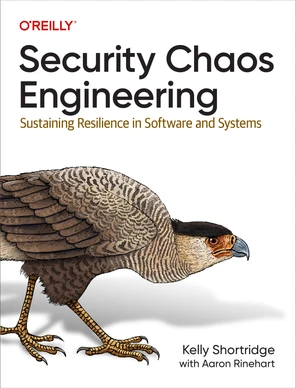
کتاب مهندسی آشوب امنیتی
امنیت سایبری شکسته است. سال به سال، مهاجمان بدون چالش و بازدارنده باقی میمانند، در حالی که تیمهای مهندسی برای طراحی، ساخت و بهرهبرداری از سیستمهای «امن» تحت فشار قرار میگیرند. شکست قابل پیشگیری نیست، مدلهای ذهنی سیستمها ناقص هستند و دنیای دیجیتال ما دائماً در حال تحول است. چگونه میتوانیم تأیید کنیم که سیستمهای ما همانطور که انتظار داریم رفتار میکنند؟ برای بهبود تابآوری سیستمهایمان چه کاری میتوانیم انجام دهیم؟ در این راهنمای جامع، نویسندگان کلی شورتریج و آرون راینهارت به شما کمک میکنند تا با استفاده از اصول و شیوههای مهندسی آشوب امنیتی، چالشهای حفظ تابآوری در سیستمهای نرمافزاری پیچیده را مدیریت کنید. با آماده شدن برای رویدادهای نامطلوب، میتوانید اطمینان حاصل کنید که آنها توانایی شما برای نوآوری، حرکت سریع و دستیابی به اهداف مهندسی و تجاریتان را مختل نمیکنند. * بیاموزید که چگونه یک برنامه امنیتی مدرن طراحی کنید * در هر مرحله از تحویل نرمافزار تصمیمات آگاهانه برای پرورش تابآوری و ظرفیت انطباقی بگیرید * پویایی سیستمهای پیچیدهای را که نتایج تابآوری به آنها بستگی دارد، درک کنید * با بدهبستانهای فنی و سازمانی که تصمیمگیری در سیستمها را تحریف میکنند، مقابله کنید * آزمایش آشوب را برای تأیید فرضیات حیاتی در مورد کیفیت نرمافزار و امنیت کاوش کنید * بیاموزید که چگونه شرکتهای بزرگ از مهندسی آشوب امنیتی استفاده میکنند
اشتراکی
فصل های کتاب
با مرور فصلها، ساختار ، محتوای کتاب را به سرعت بشناسید.
با مرور فصلهای این کتاب میتونی خیلی سریع بفهمی هر بخش چی یاد میده، ساختار کلی چطوره و از کجا باید شروع کنی. هر فصل روی یک مفهوم یا مهارت خاص تمرکز داره و موضوعات اصلیش رو میبینی تا انتخابت آگاهانهتر باشه. چه بخوای کل کتاب رو دنبال کنی، چه فقط یک بخش خاص رو دنبال کنی، این نما کمکت میکنه مسیرت رو پیدا کنی.
تابآوری در نرمافزار و سیستمها
What Is a Complex System? • Variety Defines Complex Systems • Complex Systems Are Adaptive • The Holistic Nature of Complex Systems • What Is Failure? • Acute and Chronic Stressors in Complex Systems • Surprises in Complex Systems • What Is Resilience? • Critical Functionality • Safety Boundaries (Thresholds) • Interactions Across Space-Time • Feedback Loops and Learning Culture • Flexibility and Openness to Change • Resilience Is a Verb • Resilience: Myth Versus Reality • Myth: Robustness = Resilience • Myth: We Can and Should Prevent Failure • Myth: The Security of Each Component Adds Up to Resilience • Myth: Creating a “Security Culture” Fixes Human Error • Chapter Takeaways
درحال تولید...
امنیت سیستم-محور
Mental Models of System Behavior • How Attackers Exploit Our Mental Models • Refining Our Mental Models • Resilience Stress Testing • The E&E Resilience Assessment Approach • Evaluation: Tier 1 Assessment • Mapping Flows to Critical Functionality • Document Assumptions About Safety Boundaries • Making Attacker Math Work for You • Starting the Feedback Flywheel with Decision Trees • Moving Toward Tier 2: Experimentation • Experimentation: Tier 2 Assessment • The Value of Experimental Evidence • Sustaining Resilience Assessments • Fail-Safe Versus Safe-to-Fail • Uncertainty Versus Ambiguity • Fail-Safe Neglects the Systems Perspective • The Fragmented World of Fail-Safe • SCE Versus Security Theater • What Is Security Theater? • How Does SCE Differ from Security Theater? • How to RAVE Your Way to Resilience • Repeatability: Handling Complexity • Accessibility: Making Security Easier for Engineers • Variability: Supporting Evolution • Chapter Takeaways
درحال تولید...
معماری و طراحی
The Effort Investment Portfolio • Allocating Your Effort Investment Portfolio • Investing Effort Based on Local Context • The Four Failure Modes Resulting from System Design • The Two Key Axes of Resilient Design: Coupling and Complexity • Designing to Preserve Possibilities • Coupling in Complex Systems • The Tight Coupling Trade-Off • The Dangers of Tight Coupling: Taming the Forest • Investing in Loose Coupling in Software Systems • Chaos Experiments Expose Coupling • Complexity in Complex Systems • Understanding Complexity: Essential and Accidental • Complexity and Mental Models • Introducing Linearity into Our Systems • Designing for Interactivity: Identity and Access Management • Navigating Flawed Mental Models • Chapter Takeaways
درحال تولید...
ساخت و تحویل
Mental Models When Developing Software • Who Owns Application Security (and Resilience)? • Lessons We Can Learn from Database Administration Going DevOps • Decisions on Critical Functionality Before Building • Defining System Goals and Guidelines on “What to Throw Out the Airlock” • Code Reviews and Mental Models • “Boring” Technology Is Resilient Technology • Standardization of Raw Materials • Developing and Delivering to Expand Safety Boundaries • Anticipating Scale and SLOs • Automating Security Checks via CI/CD • Standardization of Patterns and Tools • Dependency Analysis and Prioritizing Vulnerabilities • Observe System Interactions Across Space-Time (or Make More Linear) • Configuration as Code • Fault Injection During Development • Integration Tests, Load Tests, and Test Theater • Beware Premature and Improper Abstractions • Fostering Feedback Loops and Learning During Build and Deliver • Test Automation • Documenting Why and When • Distributed Tracing and Logging • Refining How Humans Interact with Build and Delivery Practices • Flexibility and Willingness to Change • Iteration to Mimic Evolution • Modularity: Humanity’s Ancient Tool for Resilience • Feature Flags and Dark Launches • Preserving Possibilities for Refactoring: Typing • The Strangler Fig Pattern • Chapter Takeaways
درحال تولید...
بهرهبرداری و مشاهده
What Does Operating and Observing Involve? • Operational Goals in SCE • The Overlap of SRE and Security • Measuring Operational Success • Crafting Success Metrics like Attackers • The DORA Metrics • SLOs, SLAs, and Principled Performance Analytics • Embracing Confidence-Based Security • Observability for Resilience and Security • Thresholding to Uncover Safety Boundaries • Attack Observability • Scalable Is Safer • Navigating Scalability • Automating Away Toil • Chapter Takeaways
درحال تولید...
پاسخگویی و بازیابی
Responding to Surprises in Complex Systems • Incident Response and the Effort Investment Portfolio • Action Bias in Incident Response • Practicing Response Activities • Recovering from Surprises • Blameless Culture • Blaming Human Error • Hindsight Bias and Outcome Bias • The Just-World Hypothesis • Neutral Practitioner Questions • Chapter Takeaways
درحال تولید...
مهندسی تابآوری پلتفرم
Production Pressures and How They Influence System Behavior • What Is Platform Engineering? • Defining a Vision • Defining a User Problem • Local Context Is Critical • User Personas, Stories, and Journeys • Understanding How Humans Make Trade-Offs Under Pressure • Designing a Solution • The Ice Cream Cone Hierarchy of Security Solutions • System Design and Redesign to Eliminate Hazards • Substitute Less Hazardous Methods or Materials • Incorporate Safety Devices and Guards • Provide Warning and Awareness Systems • Apply Administrative Controls Including Guidelines and Training • Two Paths: The Control Strategy or the Resilience Strategy • Experimentation and Feedback Loops for Solution Design • Implementing a Solution • Fostering Consensus • Planning for Migration • Success Metrics • Chapter Takeaways
درحال تولید...
آزمایشهای آشوب امنیتی
Lessons Learned from Early Adopters • Lesson #1. Start in Nonproduction Environments; You Can Still Learn a Lot • Lesson #2. Use Past Incidents as a Source of Experiments • Lesson #3. Publish and Evangelize Experimental Findings • Setting Experiments Up for Success • Designing a Hypothesis • Designing an Experiment • Experiment Design Specifications • Conducting Experiments • Collecting Evidence • Analyzing and Documenting Evidence • Capturing Knowledge for Feedback Loops • Document Experiment Release Notes • Automating Experiments • Easing into Chaos: Game Days • Example Security Chaos Experiments • Security Chaos Experiments for Production Infrastructure • Security Chaos Experiments for Build Pipelines • Security Chaos Experiments in Cloud Native Environments • Security Chaos Experiments in Windows Environments • Chapter Takeaways
درحال تولید...
مهندسی آشوب امنیتی در عمل
Experience Report: The Existence of Order Through Chaos (UnitedHealth Group) • The Story of ChaoSlingr • Step-by-Step Example: PortSlingr • Experience Report: A Quest for Stronger Reliability (Verizon) • The Bigger They Are… • All Hands on Deck Means No Hands on the Helm • Assert Your Hypothesis • Reliability Experiments • Cost Experiments • Performance Experiments • Risk Experiments • More Traditionally Known Experiments • Changing the Paradigm to Continuous • Lessons Learned • Experience Report: Security Monitoring (OpenDoor) • Experience Report: Applied Security (Cardinal Health) • Building the SCE Culture • The Mission of Applied Security • The Method: Continuous Verification and Validation (CVV) • The CVV Process Includes Four Steps • Experience Report: Balancing Reliability and Security via SCE (Accenture Global) • Our Roadmap to SCE Enterprise Capability • Our Process for Adoption • Experience Report: Cyber Chaos Engineering (Capital One) • What Does All This Have to Do with SCE? • What Is Secure Today May Not Be Secure Tomorrow • How We Started • How We Did This in Ye Olden Days • Things I’ve Learned Along the Way • A Reduction of Guesswork • Driving Value • Conclusion • Chapter Takeaways
درحال تولید...
9 فصل در حال تولید
مدت زمان خوانش
14:36
نوع کتاب
اشتراکی
شرکت کنندگان
0 نفر
تولید کتاب
۳۱ شهریور ۱۴۰۵