

Book Building Micro-Frontends
What's the answer to today's increasingly complex web applications? Micro-frontends. Inspired by the microservices model, this approach lets you break interfaces into separate features managed by different teams of developers. With this practical guide, Luca Mezzalira shows software architects, tech leads, and software developers how to build and deliver artifacts atomically rather than use a big bang deployment. You'll learn how micro-frontends enable your team to choose any library or framework. This gives your organization technical flexibility and allows you to hire and retain a broad spectrum of talent. Micro-frontends also support distributed or colocated teams more efficiently. Pick up this book and learn how to get started with this technological breakthrough right away. Explore available frontend development architectures Learn how microservice principles apply to frontend development Understand the four pillars for creating a successful micro-frontend architecture Examine the benefits and pitfalls of existing micro-frontend architectures Learn principles and best practices for creating successful automation strategies Discover patterns for integrating micro-frontend architectures using microservices or a monolith API layer
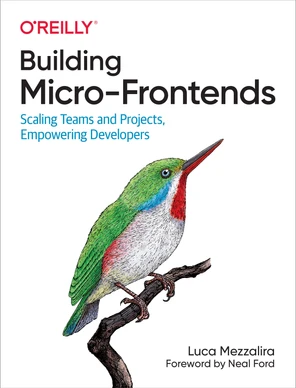
Book overview
A look at the structure and key facts of the book

Publication date
November 18, 2021

Edition
1 edition

Total chapters
10 chapters

Total pages
334 pages

Level
Intermediate to advanced

What's the answer to today's increasingly complex web applications? Micro-frontends. Inspired by the microservices model, this approach lets you break interfaces into separate features managed by different teams of developers. With this practical guide, Luca Mezzalira shows software architects, tech leads, and software developers how to build and deliver artifacts atomically rather than use a big bang deployment.
You'll learn how micro-frontends enable your team to choose any library or framework. This gives your organization technical flexibility and allows you to hire and retain a broad spectrum of talent. Micro-frontends also support distributed or colocated teams more efficiently. Pick up this book and learn how to get started with this technological breakthrough right away.
- Explore available frontend development architectures
- Learn how microservice principles apply to frontend development
- Understand the four pillars for creating a successful micro-frontend architecture
- Examine the benefits and pitfalls of existing micro-frontend architectures
- Learn principles and best practices for creating successful automation strategies
- Discover patterns for integrating micro-frontend architectures using microservices or a monolith API layer
Browse this section to get a quick overall picture of the book's content.
Micro-frontend Architecture Fundamentals
This book explores how to break down complex user interfaces into independent features managed by different development teams. It applies the fundamental principles of microservices to frontend development and elucidates the four core pillars for creating a successful micro-frontend architecture. Readers gain a deep understanding of how to build and deliver frontend artifacts atomically.
Practical Implementation and Strategies
The book provides practical guidance for implementing micro-frontend architectures, including an examination of existing architectures and their challenges. It also emphasizes the importance of automation in development and deployment cycles, covering best practices for creating successful automation strategies. Readers will discover patterns for integrating micro-frontends using microservices or monolith API layers.
Organizational Impact and Technical Flexibility
This guide demonstrates how micro-frontends enable organizations to enhance their technical flexibility and attract and retain a broad spectrum of talent. It also addresses how this approach supports distributed or colocated teams more efficiently. The book helps technical leaders and architects understand the organizational benefits and how to manage changes in team structure.
The authors behind this book are among the most prominent experts and pioneers of their field. Their work is the result of years of hands-on experience, deep research and collaboration with the world's largest technology organizations and companies.Each of these authors, through specialist books and articles, has played an important role in shaping and advancing technical knowledge worldwide.

Comments
Readers' experience with this book - comments from buyers and other users
Published
Reading time
10:09
Book type
Subscription
Participants
Be the first
Last updated
Oct 31, 2026