

Book Building Micro-Frontends
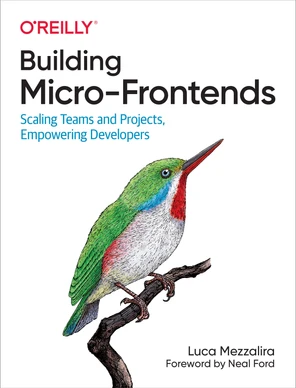
What's the answer to today's increasingly complex web applications? Micro-frontends. Inspired by the microservices model, this approach lets you break interfaces into separate features managed by different teams of developers. With this practical guide, Luca Mezzalira shows software architects, tech leads, and software developers how to build and deliver artifacts atomically rather than use a big bang deployment. You'll learn how micro-frontends enable your team to choose any library or framework. This gives your organization technical flexibility and allows you to hire and retain a broad spectrum of talent. Micro-frontends also support distributed or colocated teams more efficiently. Pick up this book and learn how to get started with this technological breakthrough right away. Explore available frontend development architectures Learn how microservice principles apply to frontend development Understand the four pillars for creating a successful micro-frontend architecture Examine the benefits and pitfalls of existing micro-frontend architectures Learn principles and best practices for creating successful automation strategies Discover patterns for integrating micro-frontend architectures using microservices or a monolith API layer
Book preface
Before you start, a short look at what you will learn in this book
In the preface, settle the general questions you have at a glance, so your view widens and your choice is more informed. Questions such as: Why was this book written and what problem does it solve? Who can use the book? A summary of the chapters and the learning goals of each part? The important changes and new improvements added across editions, and so on — we cover all of these for you.
Target audience
This book is ideal for software architects seeking solutions to manage the complexity of large-scale web applications. They can leverage the principles and patterns provided to design scalable and maintainable frontend systems. This guide helps them make informed architectural decisions.
Tech leads and team managers responsible for guiding frontend development teams will greatly benefit from this book. It helps them organize their teams for working with micro-frontends and implement automation and deployment strategies. They can use this knowledge to improve team efficiency and coordination.
Experienced software developers looking to expand their knowledge of modern frontend architectures are a primary audience for this book. They will learn how to technically implement micro-frontends, address common challenges, and apply best practices in their projects. This book enhances their skills for building complex web applications.
Furthermore, this book is highly beneficial for organizations transitioning from monolithic architectures to more distributed approaches. It helps them understand the benefits and pitfalls of micro-frontends and plan a successful migration strategy. The book offers insights into how micro-frontends impact organizational culture and structure.
Why the book was written
This book is designed to address the increasing complexity of modern web applications. By introducing the micro-frontends approach, it helps developers and architects break down user interfaces into manageable components. This enables independent delivery and greater agility within development teams.
A key reason for this book's importance is its ability to offer technical flexibility to organizations. With micro-frontends, teams can choose diverse libraries and frameworks, fostering innovation and attracting a wide range of talent. This approach allows organizations to react more swiftly to market changes.
The book specifically addresses the challenges of deploying and managing large web applications. By focusing on atomic delivery rather than a 'big bang' deployment, it reduces risks and makes development processes more efficient. This guide is essential for anyone looking to improve the scalability and maintainability of their frontend applications.
This resource helps teams align their organizational structure with software architecture. Inspired by the microservices model, micro-frontends allow distributed or colocated teams to work independently, boosting overall productivity. The book provides a roadmap for establishing a culture of automation and independent deployment.
Content overview
This book serves as a comprehensive and practical guide to building and deploying micro-frontends. The author clearly demonstrates how this approach can help solve complexity issues in modern web applications and explains how to apply microservice principles to the frontend. It is an invaluable resource for any development team.
The book delves deeply into various micro-frontend architectures, their benefits, and their pitfalls. It also outlines the four core pillars for creating a successful architecture and provides real-world examples from companies like Zalando and Spotify. This example-driven approach makes complex concepts easier to grasp.
A strong point of this book is its focus on automation and deployment strategies. The guide covers principles and best practices for creating efficient CI/CD pipelines for micro-frontends. This section is highly practical for teams looking to optimize their development and delivery processes.
This work explores not only the technical aspects but also the organizational implications of implementing micro-frontends. It helps readers understand how this architecture can impact team structure, communication, and governance. This holistic perspective makes it an essential resource for technical leaders and architects.
Published
Reading time
10:09
Book type
Subscription
Participants
Be the first
Last updated
Oct 31, 2026