

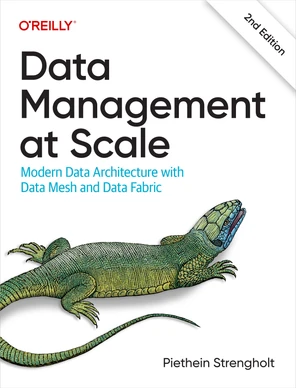
Book Data Management at Scale, 2nd Edition
As data management continues to evolve rapidly, managing all of your data in a central place, such as a data warehouse, is no longer scalable. Today's world is about quickly turning data into value. This requires a paradigm shift in the way we federate responsibilities, manage data, and make it available to others. With this practical book, you'll learn how to design a next-gen data architecture that takes into account the scale you need for your organization. Executives, architects and engineers, analytics teams, and compliance and governance staff will learn how to build a next-gen data landscape. Author Piethein Strengholt provides blueprints, principles, observations, best practices, and patterns to get you up to speed. * Examine data management trends, including regulatory requirements, privacy concerns, and new developments such as data mesh and data fabric * Go deep into building a modern data architecture, including cloud data landing zones, domain-driven design, data product design, and more * Explore data governance and data security, master data management, self-service data marketplaces, and the importance of metadata
Book preface
Before you start, a short look at what you will learn in this book
In the preface, settle the general questions you have at a glance, so your view widens and your choice is more informed. Questions such as: Why was this book written and what problem does it solve? Who can use the book? A summary of the chapters and the learning goals of each part? The important changes and new improvements added across editions, and so on — we cover all of these for you.
Target audience
This book is ideal for executives and architects who need to understand the strategic implications of modern data management and design scalable data landscapes. It provides the high-level principles and blueprints necessary for informed decision-making.
Engineers and analytics teams will find practical guidance on implementing modern data architectures, including cloud data landing zones, domain-driven design, and data product design. It helps them build and manage data systems effectively.
Compliance and governance staff will benefit from the deep dive into data governance and data security. The book covers regulatory requirements, privacy concerns, and best practices for ensuring data integrity and secure access.
Anyone looking to transition from traditional, centralized data management to a more distributed, value-driven approach will find this book invaluable. It outlines the necessary paradigm shifts in responsibility federation and data availability.
Why the book was written
This book is essential because it tackles the evolving landscape of data management, where traditional centralized approaches are no longer scalable. It provides solutions for organizations struggling to quickly derive value from their data in a distributed environment.
It offers practical blueprints, principles, and patterns for designing a next-generation data architecture. Readers will learn how to build a data landscape that supports the scale and agility required by modern enterprises.
The book integrates and explains crucial modern data paradigms such as data mesh and data fabric. It helps professionals understand how to implement these concepts to improve data accessibility, governance, and value creation.
Beyond theoretical concepts, the book emphasizes practical application, providing best practices and real-world examples. It guides readers through building modern data architectures, from cloud landing zones to data product design and robust governance.
Content overview
This book serves as a comprehensive guide for navigating the complexities of modern data management at scale. It effectively addresses the limitations of traditional data warehouses and champions a paradigm shift towards distributed responsibilities and rapid value creation.
It provides actionable insights and practical blueprints for designing next-generation data architectures. The content is well-structured, covering everything from cloud data landing zones and domain-driven design to data product design, making it highly valuable for implementation.
The book excels in its exploration of critical data management trends, including data mesh and data fabric, while also emphasizing regulatory requirements and privacy concerns. It offers a holistic view of the challenges and solutions in today's data landscape.
A strong focus on data governance, data security, master data management, and metadata ensures that readers gain a complete understanding of how to manage data effectively and securely. It promotes self-service data marketplaces and highlights the importance of metadata for data democratization.
12 chapters in production
Reading time
12:48
Book type
Subscription
Participants
Be the first
Last updated
Sep 30, 2026