

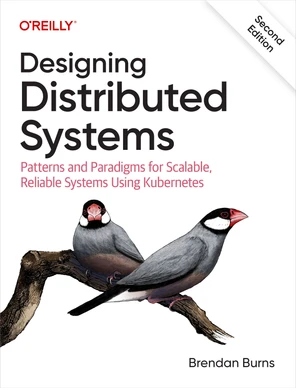
Book Designing Distributed Systems, 2nd Edition
Every distributed system strives for reliability, performance, and quality, but building such a system is hard. Establishing a set of design patterns enables software developers and system architects to use a common language to describe their systems and learn from the patterns and practices developed by others. The popularity of containers and Kubernetes paves the way for core distributed system patterns and reusable containerized components. This practical guide presents a collection of repeatable, generic patterns to help guide the systems you build using common patterns and practices drawn from some of the highest performing distributed systems in use today. These common patterns make the systems you build far more approachable and efficient, even if you've never built a distributed system before. Author Brendan Burns demonstrates how you can adapt existing software design patterns for designing and building reliable distributed applications. Systems engineers and application developers will learn how these long-established patterns provide a common language and framework for dramatically increasing the quality of your system. This fully updated second edition includes new chapters on AI inference, AI training, and building robust systems for the real world. Understand how patterns and reusable components enable the rapid development of reliable distributed systems Use the sidecar, adapter, and ambassador patterns to split your application into a group of containers on a single machine Explore loosely coupled multinode distributed patterns for replication, scaling, and communication between components Learn distributed system patterns for large-scale batch data processing covering work queues, event-based processing, and coordinated workflows
Book preface
Before you start, a short look at what you will learn in this book
In the preface, settle the general questions you have at a glance, so your view widens and your choice is more informed. Questions such as: Why was this book written and what problem does it solve? Who can use the book? A summary of the chapters and the learning goals of each part? The important changes and new improvements added across editions, and so on — we cover all of these for you.
Target audience
Systems engineers seeking to design and implement reliable, scalable distributed infrastructure. They will gain actionable patterns to improve infrastructure architecture.
Application developers intending to structure their containers and microservices effectively in distributed environments. The book helps them master container-native application design.
Software architects who require a standardized language and repeatable patterns to guide engineering teams. The book provides clear reference models for architecture design.
DevOps engineers and cloud professionals aiming to optimize monitoring, logging, and resiliency in containerized systems. It equips them with practical techniques for operational management.
Why the book was written
Designing modern distributed systems is highly complex due to strict requirements for performance and reliability. Establishing generic patterns provides a foundational shared language that solves repetitive architectural challenges.
The rapid adoption of containerization and Kubernetes creates an ideal foundation for reusable components. Leveraging these technologies drastically accelerates development speed and boosts system quality.
Learning proven design patterns distilled from high-performance systems prevents developers from repeating common architectural mistakes. These strategies offer reliable, battle-tested solutions for managing system complexity.
Incorporating emerging topics like AI serving and analysis of real-world failure patterns keeps the material fully aligned with modern engineering needs. These updates empower teams to design more resilient applications.
Content overview
This book effectively translates complex distributed system concepts into highly practical and accessible patterns. The reliance on container and Kubernetes examples delivers immense practical value.
Drawing from deep experience with the Kubernetes project, the author imparts concrete insights and lessons learned from real-world systems. The coverage remains grounded in practice rather than abstract theory.
The addition of dedicated chapters on AI inference serving and common failure patterns makes this second edition a timely and vital resource for software engineers.
Structuring topics progressively from single-node patterns to complex multinode batch processing creates an intuitive, step-by-step learning journey for software architecture.
16 chapters in production
Reading time
05:59
Book type
Subscription
Participants
Be the first
Last updated
Sep 30, 2026