

Book Fundamentals of Data Engineering
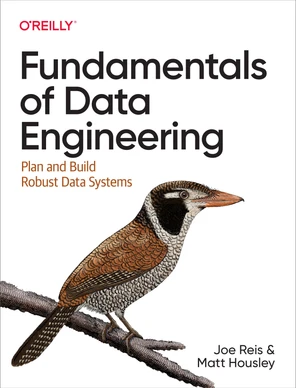
Data engineering has grown rapidly in the past decade, leaving many software engineers, data scientists, and analysts looking for a comprehensive view of this practice. With this practical book, you'll learn how to plan and build systems to serve the needs of your organization and customers by evaluating the best technologies available through the framework of the data engineering lifecycle. Authors Joe Reis and Matt Housley walk you through the data engineering lifecycle and show you how to stitch together a variety of cloud technologies to serve the needs of downstream data consumers. You'll understand how to apply the concepts of data generation, ingestion, orchestration, transformation, storage, and governance that are critical in any data environment regardless of the underlying technology. This book will help you: Get a concise overview of the entire data engineering landscape Assess data engineering problems using an end-to-end framework of best practices Cut through marketing hype when choosing data technologies, architecture, and processes Use the data engineering lifecycle to design and build a robust architecture Incorporate data governance and security across the data engineering lifecycle
Book chapters
Browse the chapters to quickly get to know the structure and content of the book.
By browsing the chapters of this book you can quickly see what each part teaches, how the whole is structured and where to start. Each chapter focuses on one concept or skill, and you see its main topics so your choice is more informed. Whether you follow the whole book or just one part, this view helps you find your way.
Part I. Foundation and Building Blocks
This section establishes the foundational concepts of data engineering, defining the role of a data engineer and introducing the data engineering lifecycle. It covers the principles of designing robust data architectures and provides a framework for evaluating and choosing the right technologies.
1. Data Engineering Described
2. The Data Engineering Lifecycle
3. Designing Good Data Architecture
4. Choosing Technologies Across the Data Engineering Lifecycle
Part II. The Data Engineering Lifecycle in Depth
This section dives deep into each phase of the data engineering lifecycle. It explores how data is generated in source systems, stored efficiently, ingested reliably, transformed through queries and models, and ultimately served for analytics, machine learning, and reverse ETL.
5. Data Generation in Source Systems
6. Storage
7. Ingestion
8. Queries, Modeling, and Transformation
9. Serving Data for Analytics, Machine Learning, and Reverse ETL
Part III. Security, Privacy, and the Future of Data Engineering
This final section addresses critical aspects of security and privacy within data engineering, emphasizing active security habits and the principle of least privilege. It also looks ahead to the future of the field, discussing emerging trends like the live data stack and the fusion of data with applications.
10. Security and Privacy
11. The Future of Data Engineering
11 chapters in production
Reading time
13:34
Book type
Subscription
Participants
Be the first
Last updated
Sep 30, 2026