

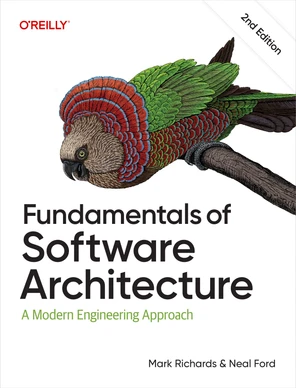
Book Fundamentals of Software Architecture, 2nd Edition
Salary surveys worldwide regularly place software architect in the top 10 best jobs, yet no real guide exists to help developers become architects. Until now. This updated edition provides a comprehensive overview of software architecture's many aspects, with five new chapters covering the latest insights from the field. Aspiring and existing architects alike will examine architectural characteristics, architectural patterns, component determination, diagramming architecture, governance, data, generative AI, team topologies, and many other topics. Mark Richards and Neal Ford—hands-on practitioners who have taught software architecture classes professionally for years—focus on architecture principles that apply across all technology stacks. You'll explore software architecture in a modern light, taking into account all the innovations of the past decade.
Book preface
Before you start, a short look at what you will learn in this book
In the preface, settle the general questions you have at a glance, so your view widens and your choice is more informed. Questions such as: Why was this book written and what problem does it solve? Who can use the book? A summary of the chapters and the learning goals of each part? The important changes and new improvements added across editions, and so on — we cover all of these for you.
Target audience
Senior developers looking for a deeper understanding of architectural-level decisions. This book helps them move from pure coding toward structural thinking.
Software architects who want to update their knowledge with modern patterns and current industry standards. This book serves as an excellent reference for reviewing principles and learning new techniques.
Technical managers and team leads who need to align their system architecture with business goals. The book provides the necessary tools for effective communication with both technical and non-technical teams.
Technology professionals seeking to learn soft skills such as negotiation, leadership, and team management alongside technical knowledge. This book strikes a balance between hard and soft skills.
Why the book was written
This book fills a gap in educational resources for developers aiming to transition into the software architect role. It provides a comprehensive roadmap that simplifies the journey to becoming a successful architect.
Drawing on years of hands-on experience in teaching and executing large-scale projects, the authors provide principles applicable across all technology stacks. This approach makes the content accessible to a wide range of professionals.
The second edition includes five new chapters covering the latest innovations and insights from the past decade. This update ensures readers are familiar with the most modern architectural approaches.
The book provides a rigorous examination of trade-offs, which is the heart of software architecture. Understanding these concepts helps architects make more informed decisions when designing complex systems.
Content overview
By providing a practical approach, this book transforms software architecture from an abstract concept into a measurable engineering discipline. The focus on trade-offs adds significant scientific and practical value to the content.
The authors have successfully integrated modern complexities such as generative AI and team topologies into the architectural framework. This modern perspective distinguishes the book from other similar resources.
The book's structure makes it suitable for both sequential reading and as a quick reference for architectural decision-making. The provided case studies and analyses make understanding the concepts very easy.
With the addition of new chapters, this second edition has become a comprehensive resource for architects at any level. The book maintains a good balance between fundamental theories and implementation realities.
27 chapters in production
Reading time
14:40
Book type
Subscription
Participants
Be the first
Last updated
Oct 1, 2026