

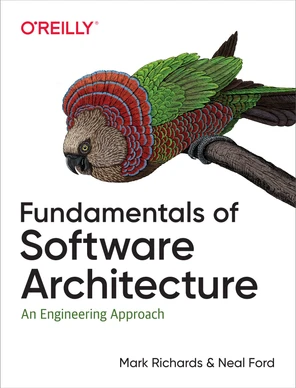
Book Fundamentals of Software Architecture
Salary surveys worldwide regularly place software architect in the top 10 best jobs, yet no real guide exists to help developers become architects. Until now. This book provides the first comprehensive overview of software architecture's many aspects. Aspiring and existing architects alike will examine architectural characteristics, architectural patterns, component determination, diagramming and presenting architecture, evolutionary architecture, and many other topics. Mark Richards and Neal Ford, hands-on practitioners who have taught software architecture classes professionally for years, focus on architecture principles that apply across all technology stacks. You'll explore software architecture in a modern light, taking into account all the innovations of the past decade. This book examines: Architecture patterns: The technical basis for many architectural decisions Components: Identification, coupling, cohesion, partitioning, and granularity Soft skills: Effective team management, meetings, negotiation, presentations, and more Modernity: Engineering practices and operational approaches that have changed radically in the past few years Architecture as an engineering discipline: Repeatable results, metrics, and concrete valuations that add rigor to software architecture
Book preface
Before you start, a short look at what you will learn in this book
In the preface, settle the general questions you have at a glance, so your view widens and your choice is more informed. Questions such as: Why was this book written and what problem does it solve? Who can use the book? A summary of the chapters and the learning goals of each part? The important changes and new improvements added across editions, and so on — we cover all of these for you.
Target audience
Aspiring Software Architects: Developers looking to transition into an architectural role will find a structured path and essential knowledge in this book. It covers fundamental concepts and practical skills needed for this career progression.
Existing Software Architects: Experienced architects can use this book to deepen their understanding of modern architectural principles and practices. It helps to refine decision-making processes and stay current with industry trends.
Software Developers: Developers who want to understand the broader context of software design and its impact on system characteristics will benefit from this book. The content helps in making more architecturally sound choices in their daily coding.
Technical Leaders and Team Leads: Individuals responsible for guiding development teams and making high-level technical decisions will find valuable insights in this book. The book provides tools for effective team management, communication, and risk analysis in an architectural context.
Why the book was written
This book addresses the existing gap in guidance for developers aspiring to become software architects. Despite high demand for this role, there are few comprehensive resources to guide this career path. This work serves as a structured guide to fill this void.
The book provides a comprehensive overview of the diverse aspects of software architecture. This broad coverage includes architectural characteristics, patterns, component determination, and evolutionary architecture, giving readers a complete understanding of the field. This holistic approach facilitates learning for both aspiring and existing architects.
This work focuses on practical, hands-on architectural principles that are applicable across all technology stacks. The authors, with years of teaching experience, ensure that the content is directly applicable to real-world scenarios. This practical focus makes the book an invaluable resource for practitioners.
The book explores software architecture in a modern light, taking into account all the innovations of the past decade. This up-to-date approach ensures that readers are familiar with the latest engineering practices and operational approaches. This helps architects design systems that align with today's technological challenges and opportunities.
Content overview
This book serves as a foundational guide, filling a critical void in literature for developers transitioning to software architecture. It offers a structured approach to understanding complex architectural concepts, helping readers navigate the field with confidence.
It is praised for its practical, hands-on approach, derived from years of professional teaching experience by the authors. The content is directly applicable to real-world architectural challenges, providing tangible guidance for problem-solving.
The book comprehensively covers essential topics, from architectural patterns and component design to soft skills and modern engineering practices. This broad coverage provides a holistic view of the architect's role and responsibilities.
Reviewers highlight its relevance to contemporary software development, acknowledging the rapid innovations of the past decade. It helps practitioners build robust and evolutionary architectures that align with the evolving technological landscape.
Published
Reading time
11:26
Book type
Subscription
Participants
7 readers
Last updated
Sep 30, 2026