

Book Practical Lakehouse Architecture
This concise yet comprehensive guide explains how to adopt a data lakehouse architecture to implement modern data platforms. It reviews the design considerations, challenges, and best practices for implementing a lakehouse and provides key insights into the ways that using a lakehouse can impact your data platform, from managing structured and unstructured data and supporting BI and AI/ML use cases to enabling more rigorous data governance and security measures. Practical Lakehouse Architecture shows you how to: Understand key lakehouse concepts and features like transaction support, time travel, and schema evolution Understand the differences between traditional and lakehouse data architectures Differentiate between various file formats and table formats Design lakehouse architecture layers for storage, compute, metadata management, and data consumption Implement data governance and data security within the platform Evaluate technologies and decide on the best technology stack to implement the lakehouse for your use case Make critical design decisions and address practical challenges to build a future-ready data platform Start your lakehouse implementation journey and migrate data from existing systems to the lakehouse
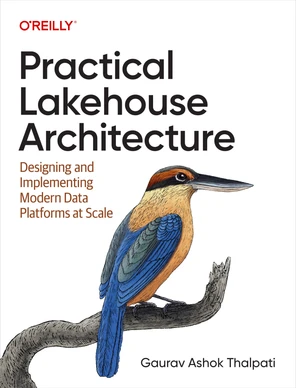
Book overview
A look at the structure and key facts of the book

Publication date
July 31, 2024

Edition
1 edition

Total chapters
9 chapters

Total pages
286 pages

Level
Intermediate to advanced

This concise yet comprehensive guide explains how to adopt a data lakehouse architecture to implement modern data platforms. It reviews the design considerations, challenges, and best practices for implementing a lakehouse and provides key insights into the ways that using a lakehouse can impact your data platform, from managing structured and unstructured data and supporting BI and AI/ML use cases to enabling more rigorous data governance and security measures.
Practical Lakehouse Architecture shows you how to:
- Understand key lakehouse concepts and features like transaction support, time travel, and schema evolution
- Understand the differences between traditional and lakehouse data architectures
- Differentiate between various file formats and table formats
- Design lakehouse architecture layers for storage, compute, metadata management, and data consumption
- Implement data governance and data security within the platform
- Evaluate technologies and decide on the best technology stack to implement the lakehouse for your use case
- Make critical design decisions and address practical challenges to build a future-ready data platform
- Start your lakehouse implementation journey and migrate data from existing systems to the lakehouse
Browse this section to get a quick overall picture of the book's content.
Storage and Table Formats
This book thoroughly examines the storage layer as the core of the lakehouse architecture. It covers the critical differences between row-oriented and columnar storage formats to optimize performance. Additionally, it guides readers through selecting and comparing modern open table formats like Delta Lake, Iceberg, and Hudi.
Key aspects covered include:
- Cloud object storage integration
- Performance benchmarking of table formats
- Ecosystem and community support
Data Governance and Security
The architecture emphasizes establishing robust data and AI governance within a unified platform. It explores metadata management, compliance, and regulations to ensure data quality and lineage across assets. Furthermore, it details access management and data protection strategies to handle sensitive information securely.
Key governance components include:
- Metadata cataloging and lineage tracking
- Compliance and regulatory auditing
- Role-based access control and data protection
The authors behind this book are among the most prominent experts and pioneers of their field. Their work is the result of years of hands-on experience, deep research and collaboration with the world's largest technology organizations and companies.Each of these authors, through specialist books and articles, has played an important role in shaping and advancing technical knowledge worldwide.

Comments
Readers' experience with this book - comments from buyers and other users
9 chapters in production
Reading time
07:53
Book type
Subscription
Participants
Be the first
Last updated
Sep 30, 2026