

Book Security Chaos Engineering
Cybersecurity is broken. Year after year, attackers remain unchallenged and undeterred, while engineering teams feel pressure to design, build, and operate "secure" systems. Failure can't be prevented, mental models of systems are incomplete, and our digital world constantly evolves. How can we verify that our systems behave the way we expect? What can we do to improve our systems' resilience? In this comprehensive guide, authors Kelly Shortridge and Aaron Rinehart help you navigate the challenges of sustaining resilience in complex software systems by using the principles and practices of security chaos engineering. By preparing for adverse events, you can ensure they don't disrupt your ability to innovate, move quickly, and achieve your engineering and business goals. * Learn how to design a modern security program * Make informed decisions at each phase of software delivery to nurture resilience and adaptive capacity * Understand the complex systems dynamics upon which resilience outcomes depend * Navigate technical and organizational trade-offs that distort decision making in systems * Explore chaos experimentation to verify critical assumptions about software quality and security * Learn how major enterprises leverage security chaos engineering
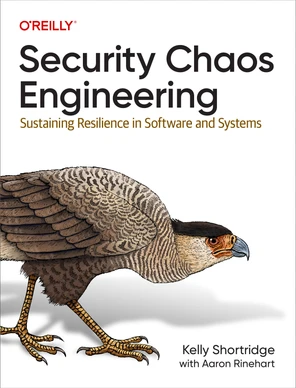
Book preface
Before you start, a short look at what you will learn in this book
In the preface, settle the general questions you have at a glance, so your view widens and your choice is more informed. Questions such as: Why was this book written and what problem does it solve? Who can use the book? A summary of the chapters and the learning goals of each part? The important changes and new improvements added across editions, and so on — we cover all of these for you.
Target audience
Software engineers and system architects responsible for designing, building, and maintaining scalable and secure systems.
Cybersecurity professionals looking for novel ways to test and improve the security posture of their systems.
Site Reliability Engineers (SREs) and operations managers dealing with the challenges of system resilience and performance in complex environments.
Technical leaders and product managers interested in understanding how to foster a culture of resilience and security within their engineering teams.
Why the book was written
Modern software systems are complex and constantly evolving, making it challenging to maintain security and resilience. Traditional security approaches often fail in the face of this complexity.
Security Chaos Engineering (SCE) offers an innovative approach to testing and improving system resilience against unexpected security events. This book helps engineers better understand their systems and prepare for failure.
The book addresses how to design, build, and operate secure and resilient systems, providing practical guidance for making informed decisions throughout the software lifecycle.
By employing the principles and practices of chaos engineering, organizations can ensure that security disruptions do not hinder their innovation and business goals.
Content overview
This book is an essential guide for anyone dealing with complex software systems. The authors effectively highlight modern security challenges and provide a practical framework for addressing them.
Security Chaos Engineering is introduced as a pioneering approach that allows teams to test their assumptions about security and identify weaknesses before attackers do.
The authors explain complex concepts well and provide practical examples that make it easier for readers to understand and implement SCE principles.
The book not only covers technical aspects but also emphasizes the importance of organizational culture and mindset shifts for achieving true resilience.
9 chapters in production
Reading time
14:36
Book type
Subscription
Participants
Be the first
Last updated
Sep 30, 2026