

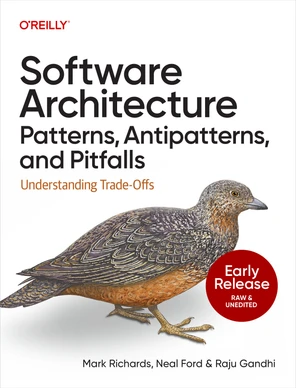
Book Software Architecture Patterns, Antipatterns, and Pitfalls
As software systems grow in complexity and scale, choosing the right architectural pattern is critical to meeting performance, agility, and operational demands. In this book, Mark Richards, Neal Ford, and Raju Gandhi detail modern software architecture patterns and the antipatterns and pitfalls to avoid. Unique star-chart ratings for each pattern let you see at a glance how well it supports scalability, resilience, and maintainability. You'll learn how your choices affect an architecture's capabilities in different contexts, such as microservices or event-driven architectures, and how to evaluate trade-offs to select the right pattern for your system's needs. Architects, software developers, and technical leaders will find new insights and tools for AI use, governance, aligning architecture with domain and business needs. * Understand the core principles, strengths, and limitations of key architecture patterns and the antipatterns to avoid * Select and apply appropriate architecture patterns based on business and technical requirements * Analyze and compare architectural trade-offs to make informed decisions about how patterns affect capabilities * Use metrics and fitness functions to modernize governance * Design cohesive, resilient, and evolvable systems using proven patterns and modern industry practices
Book preface
Before you start, a short look at what you will learn in this book
In the preface, settle the general questions you have at a glance, so your view widens and your choice is more informed. Questions such as: Why was this book written and what problem does it solve? Who can use the book? A summary of the chapters and the learning goals of each part? The important changes and new improvements added across editions, and so on — we cover all of these for you.
Target audience
Software Architects: This book is tailored for software architects seeking to deepen their understanding of modern architectural patterns, antipatterns, and pitfalls. It offers advanced insights into evaluating trade-offs and selecting optimal designs for complex, distributed systems. The content directly supports making informed decisions that impact performance, agility, and operational efficiency.
Software Developers: Developers aiming to advance their architectural knowledge and contribute more effectively to system design will find this book highly beneficial. It provides practical guidance on how architectural choices influence system capabilities, particularly in contexts like microservices and event-driven architectures. Understanding these concepts is crucial for building robust and scalable applications.
Technical Leaders: Technical leaders, including team leads and engineering managers, will gain valuable tools for modernizing governance and aligning architecture with domain and business needs. The book's focus on metrics, fitness functions, and strategic architectural decision-making empowers leaders to guide their teams toward more cohesive, resilient, and evolvable systems. It helps in fostering a culture of architectural excellence.
Anyone Building Distributed Systems: Individuals involved in designing or implementing distributed systems, regardless of their specific role, will benefit from the comprehensive coverage of patterns and antipatterns. The book's emphasis on understanding capabilities, contexts, and trade-offs is universally applicable to anyone grappling with the complexities of large-scale software. It provides a foundational understanding for tackling real-world architectural challenges.
Why the book was written
This book is essential for understanding the complexities of modern software systems, offering guidance on selecting appropriate architectural patterns. It addresses the critical need for robust and scalable designs in today's rapidly evolving technological landscape. The insights provided help architects and developers navigate the challenges of system growth and increasing demands.
It provides a detailed exploration of both effective architectural patterns and common antipatterns, equipping readers with the knowledge to build resilient and maintainable systems. The book emphasizes practical application, showing how architectural choices directly impact system capabilities. This makes it a valuable resource for improving design decisions and avoiding costly mistakes.
The text offers unique star-chart ratings for each pattern, providing a quick visual assessment of its support for key qualities like scalability, resilience, and maintainability. This feature allows for rapid comparison and evaluation, streamlining the decision-making process for architects. It helps in understanding the trade-offs involved in different architectural approaches.
Furthermore, the book integrates discussions on AI use, governance, and aligning architecture with business needs, reflecting current industry trends. It provides tools and insights for modernizing architectural practices and ensuring that technical designs serve strategic organizational goals. This holistic approach ensures that readers are well-prepared for future architectural challenges.
Content overview
This book provides a comprehensive guide to modern software architecture, effectively detailing both beneficial patterns and detrimental antipatterns. It offers practical insights into how architectural decisions influence system performance, scalability, and maintainability. The inclusion of star-chart ratings for each pattern is a particularly useful feature for quick evaluation.
The authors skillfully explain the nuances of architectural trade-offs, enabling readers to select the most appropriate patterns for diverse contexts, such as microservices and event-driven architectures. It serves as an invaluable resource for understanding the implications of different design choices. The book's focus on real-world applicability makes it highly relevant for practitioners.
It addresses contemporary concerns like AI integration and architectural governance, offering tools and strategies for modernizing existing systems and practices. The emphasis on aligning architecture with business needs and using fitness functions provides a forward-thinking approach to system design. This makes it a timely and essential read for technical leaders.
The book is well-structured, moving from fundamental concepts to specific patterns, antipatterns, and pitfalls, ensuring a thorough understanding. It empowers architects, developers, and technical leaders to design cohesive, resilient, and evolvable systems. The clear explanations and practical examples make complex topics accessible and actionable.
37 chapters in production
Reading time
13:11
Book type
Subscription
Participants
Be the first
Last updated
Sep 30, 2026