

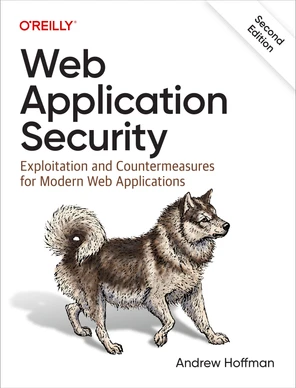
Book Web Application Security, 2nd Edition
In the first edition of this critically acclaimed book, Andrew Hoffman defined the three pillars of application security: reconnaissance, offense, and defense. In this revised and updated second edition, he examines dozens of related topics, from the latest types of attacks and mitigations to threat modeling, the secure software development lifecycle (SSDL/SDLC), and more. Hoffman, senior staff security engineer at Ripple, also provides information regarding exploits and mitigations for several additional web application technologies such as GraphQL, cloud-based deployments, content delivery networks (CDN) and server-side rendering (SSR). Following the curriculum from the first book, this second edition is split into three distinct pillars comprising three separate skill sets: Pillar 1: Recon—Learn techniques for mapping and documenting web applications remotely, including procedures for working with web applications Pillar 2: Offense—Explore methods for attacking web applications using a number of highly effective exploits that have been proven by the best hackers in the world. These skills are valuable when used alongside the skills from Pillar 3. Pillar 3: Defense—Build on skills acquired in the first two parts to construct effective and long-lived mitigations for each of the attacks described in Pillar 2.
Book overview
A look at the structure and key facts of the book

Publication date
January 19, 2024

Edition
2 edition

Total chapters
37 chapters

Total pages
444 pages

Level
Intermediate to advanced

In the first edition of this critically acclaimed book, Andrew Hoffman defined the three pillars of application security: reconnaissance, offense, and defense. In this revised and updated second edition, he examines dozens of related topics, from the latest types of attacks and mitigations to threat modeling, the secure software development lifecycle (SSDL/SDLC), and more.
Hoffman, senior staff security engineer at Ripple, also provides information regarding exploits and mitigations for several additional web application technologies such as GraphQL, cloud-based deployments, content delivery networks (CDN) and server-side rendering (SSR). Following the curriculum from the first book, this second edition is split into three distinct pillars comprising three separate skill sets:
- Pillar 1: Recon—Learn techniques for mapping and documenting web applications remotely, including procedures for working with web applications
- Pillar 2: Offense—Explore methods for attacking web applications using a number of highly effective exploits that have been proven by the best hackers in the world. These skills are valuable when used alongside the skills from Pillar 3.
- Pillar 3: Defense—Build on skills acquired in the first two parts to construct effective and long-lived mitigations for each of the attacks described in Pillar 2.
Browse this section to get a quick overall picture of the book's content.
Web Application Reconnaissance and Mapping
This book explores comprehensive techniques for reconnaissance and documenting web applications remotely. Readers learn how to map out application structures, APIs, and third-party dependencies. This section includes procedures for working with web applications and gaining an intimate understanding of their architecture.
The goal is to achieve a thorough understanding of the application's purpose and functionality before any offensive actions. This knowledge is crucial for identifying potential weak points and vulnerabilities. This approach helps hackers and security professionals plan more targeted attacks.
Offensive Techniques and Exploitation
The book covers various methods for attacking web applications using effective exploits. This includes exploring common vulnerabilities such as XSS (Cross-Site Scripting), CSRF (Cross-Site Request Forgery), Injection, and client-side attacks. The techniques discussed are proven by the best hackers in the world.
This section helps readers understand an attacker's mindset and become aware of the tools and methodologies used to exploit security weaknesses. These skills are essential for penetration testing and security assessments of web applications. Understanding these attacks provides the foundation for building robust defenses.
Defensive Strategies and Secure Architecture
This book focuses on constructing effective and long-lived mitigations against the attacks described. Readers learn how to design secure application architectures and integrate security into the software development lifecycle (SDLC). This includes threat modeling, security code reviews, and implementing mitigation strategies.
The goal is to build hacker-resistant web applications and reduce vulnerabilities in production code. This section helps developers and security engineers apply best practices to protect applications against modern threats. It also delves into secure configurations and defensive policies.
Security for Modern Web Technologies
The second edition specifically addresses the security of modern web technologies such as GraphQL, cloud-based deployments, content delivery networks (CDN), and server-side rendering (SSR). This section explores the vulnerabilities and mitigation techniques associated with these newer technologies.
This focus on contemporary technologies ensures that the book's content is relevant and applicable to current security challenges. Readers gain practical insights into how to secure these critical components within the modern web ecosystem. This up-to-date approach makes the book a valuable resource for professionals.
The authors behind this book are among the most prominent experts and pioneers of their field. Their work is the result of years of hands-on experience, deep research and collaboration with the world's largest technology organizations and companies.Each of these authors, through specialist books and articles, has played an important role in shaping and advancing technical knowledge worldwide.

Comments
Readers' experience with this book - comments from buyers and other users
37 chapters in production
Reading time
11:10
Book type
Subscription
Participants
Be the first
Last updated
Sep 30, 2026