

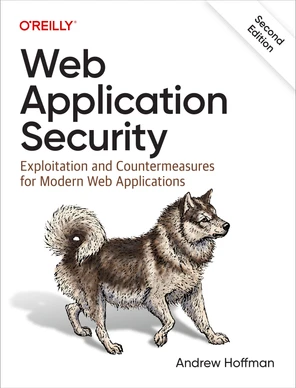
Book Web Application Security, 2nd Edition
In the first edition of this critically acclaimed book, Andrew Hoffman defined the three pillars of application security: reconnaissance, offense, and defense. In this revised and updated second edition, he examines dozens of related topics, from the latest types of attacks and mitigations to threat modeling, the secure software development lifecycle (SSDL/SDLC), and more. Hoffman, senior staff security engineer at Ripple, also provides information regarding exploits and mitigations for several additional web application technologies such as GraphQL, cloud-based deployments, content delivery networks (CDN) and server-side rendering (SSR). Following the curriculum from the first book, this second edition is split into three distinct pillars comprising three separate skill sets: Pillar 1: Recon—Learn techniques for mapping and documenting web applications remotely, including procedures for working with web applications Pillar 2: Offense—Explore methods for attacking web applications using a number of highly effective exploits that have been proven by the best hackers in the world. These skills are valuable when used alongside the skills from Pillar 3. Pillar 3: Defense—Build on skills acquired in the first two parts to construct effective and long-lived mitigations for each of the attacks described in Pillar 2.
Book preface
Before you start, a short look at what you will learn in this book
In the preface, settle the general questions you have at a glance, so your view widens and your choice is more informed. Questions such as: Why was this book written and what problem does it solve? Who can use the book? A summary of the chapters and the learning goals of each part? The important changes and new improvements added across editions, and so on — we cover all of these for you.
Target audience
This book is ideal for security engineers and penetration testers who need to deepen their understanding of web application vulnerabilities and exploitation techniques. It provides advanced methods for reconnaissance and offensive security, enabling them to conduct more effective security assessments. The detailed coverage of various exploits will enhance their practical skills.
Software developers and architects will find this book invaluable for building more secure web applications from the ground up. It offers insights into secure design principles, threat modeling, and defensive coding practices. Understanding the 'defense' pillar will help them integrate security considerations throughout the development lifecycle.
Individuals involved in DevSecOps roles will benefit from the book's emphasis on integrating security into automated processes and the software development pipeline. Topics like vulnerability discovery, analysis, and management are directly applicable to establishing robust security programs. It helps in fostering a security-first culture within development teams.
Anyone with an intermediate to advanced understanding of web technologies and a desire to specialize in application security will find this book highly relevant. It assumes some foundational knowledge and builds upon it to cover complex attack vectors and sophisticated defense mechanisms. The book is suitable for those looking to advance their career in web security.
Why the book was written
This book provides a comprehensive guide to web application security, covering reconnaissance, offense, and defense. It aims to equip readers with a holistic understanding of how to identify, exploit, and mitigate vulnerabilities in modern web applications. The content is structured around three core pillars, ensuring a systematic learning approach.
It addresses the evolving landscape of web security by including discussions on contemporary technologies like GraphQL, cloud deployments, CDNs, and server-side rendering. This ensures that the knowledge gained is relevant to current web development practices and emerging threats. The book's updated content reflects the latest attack types and mitigation strategies.
The book is designed to bridge the gap between offensive and defensive security mindsets. By first exploring attack methods, it then provides the necessary context to build robust and long-lived defenses. This integrated approach helps security professionals and developers understand the attacker's perspective to better protect their applications.
It serves as a practical resource for integrating security into the software development lifecycle (SDLC). Readers will learn about secure application architecture, threat modeling, comprehensive code reviews, and vulnerability management. The goal is to foster a proactive security posture from design to deployment.
Content overview
This second edition significantly expands upon its predecessor by incorporating new web application technologies and attack vectors. It provides updated information on GraphQL, cloud-based deployments, and server-side rendering, making the content highly relevant to modern web environments. The book effectively addresses the evolving challenges in application security.
The book maintains its critically acclaimed structure, organizing content around the three pillars of reconnaissance, offense, and defense. This logical progression allows readers to systematically build their skills from understanding targets to exploiting vulnerabilities and finally implementing robust countermeasures. It offers a well-rounded educational experience.
It offers practical, real-world insights into web application security, drawing from the author's extensive experience as a senior staff security engineer. The techniques and exploits discussed are proven by top hackers, providing readers with actionable knowledge. The focus on both attacking and defending helps readers develop a comprehensive security mindset.
The book is praised for its clear and comprehensive coverage of complex security topics, making advanced concepts accessible to its target audience. It serves as an essential resource for professionals seeking to enhance their expertise in securing web applications. The detailed explanations and practical examples contribute to its high educational value.
37 chapters in production
Reading time
11:10
Book type
Subscription
Participants
Be the first
Last updated
Sep 30, 2026