

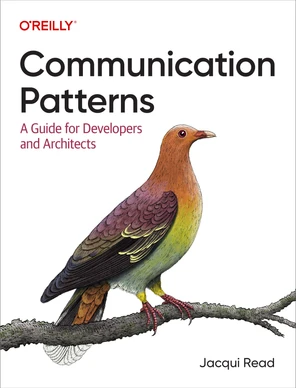
Book Communication Patterns
Having a great idea or design is not enough to make your software project succeed. If you want stakeholders to buy into your design and teams to collaborate and contribute to the vision, you also need to communicate effectively. In this practical book, author Jacqui Read shows you how to successfully present your architecture and get stakeholders to jump on board. Misunderstanding and lack of buy-in leads to increasing costs, unmet requirements, and an architecture that is not what you intended. Through constructive examples and patterns, this book shows you how to create documentation and diagrams that actually get the message across to the different audiences you'll face. This book shows you how to: Design diagrams and documentation appropriate to your expected audience, intended message, and project stage Create documentation and diagrams that are accessible to those with varying roles, needs, or disabilities Master written, verbal, and nonverbal communication to succeed in technical settings Apply the communication patterns presented in this book in real-world projects and software designs Communicate and collaborate with distributed teams to successfully design and document software and technical projects
Book preface
Before you start, a short look at what you will learn in this book
In the preface, settle the general questions you have at a glance, so your view widens and your choice is more informed. Questions such as: Why was this book written and what problem does it solve? Who can use the book? A summary of the chapters and the learning goals of each part? The important changes and new improvements added across editions, and so on — we cover all of these for you.
Target audience
This book is ideal for software architects and technical leads who need to effectively present their designs and gain buy-in from stakeholders. It provides the tools to translate complex architectural concepts into clear, understandable communications. The focus on practical patterns helps these professionals improve their influence and leadership.
Developers and engineers looking to enhance their communication skills, particularly in documenting their work and collaborating within teams, will find this book highly valuable. It offers guidance on creating accessible diagrams and writing clear technical documentation. This helps them ensure their contributions are well-understood and integrated into larger projects.
Professionals working in distributed or hybrid teams will benefit immensely from the strategies for remote communication. The book addresses specific challenges related to time zones, cultural differences, and tool selection, providing actionable advice for seamless collaboration. It helps teams maintain productivity and cohesion regardless of geographical separation.
Anyone involved in knowledge management or technical documentation will find comprehensive guidance on creating, maintaining, and sharing organizational knowledge. The book moves beyond traditional documentation, offering insights into leveraging people and modern practices like documentation as code. This ensures that valuable information is always current and accessible to those who need it.
Why the book was written
Many software projects fail not due to poor technical design, but ineffective communication. This book addresses that gap by providing practical patterns and techniques to ensure architectural visions are understood and embraced by all stakeholders. It highlights how clear communication can prevent costly misunderstandings and ensure project requirements are met.
It offers a comprehensive guide to improving communication across various modalities, from visual diagrams to written and verbal interactions. The book emphasizes the importance of tailoring messages to different audiences and contexts, ensuring maximum impact and clarity. This approach helps technical professionals articulate complex ideas in an accessible manner.
The book provides actionable strategies for managing knowledge within technical teams, moving beyond simple documentation to foster a culture of shared understanding. It introduces principles for capturing, maintaining, and leveraging collective knowledge effectively. This is crucial for enhancing productivity and innovation in dynamic software development environments.
With the rise of distributed and hybrid work models, the book dedicates significant attention to effective remote communication. It equips readers with techniques to navigate challenges like time zone differences and cultural nuances. By mastering synchronous and asynchronous communication, teams can collaborate seamlessly regardless of their geographical location.
Content overview
This book provides a much-needed practical guide for technical professionals to master the art of communication in software development. It offers concrete patterns and examples for designing effective diagrams and documentation that truly resonate with diverse audiences. Readers will find its advice invaluable for securing stakeholder buy-in and fostering team collaboration.
The book excels in breaking down complex communication challenges into manageable, actionable strategies. It covers a wide spectrum of communication modalities, from visual to verbal and nonverbal, ensuring a holistic approach to technical communication. Its emphasis on clarity, accessibility, and audience empathy makes it a standout resource for improving professional interactions.
A significant strength of this book is its focus on knowledge management, offering insights beyond mere documentation. It guides readers on how to effectively capture, maintain, and disseminate crucial information within technical teams. This makes it an essential read for organizations aiming to optimize their collective knowledge and drive innovation.
The book offers timely and relevant advice for navigating the complexities of remote and hybrid work environments. Its detailed patterns for synchronous and asynchronous communication, coupled with guidance on cultural differences and tool selection, are highly practical. This makes it an indispensable resource for any team striving for effective collaboration across geographical boundaries.
15 chapters in production
Reading time
07:53
Book type
Subscription
Participants
Be the first
Last updated
Sep 30, 2026