

Book Deciphering Data Architectures
Data fabric, data lakehouse, and data mesh have recently appeared as viable alternatives to the modern data warehouse. These new architectures have solid benefits, but they're also surrounded by a lot of hyperbole and confusion. This practical book provides a guided tour of these architectures to help data professionals understand the pros and cons of each. James Serra, big data and data warehousing solution architect at Microsoft, examines common data architecture concepts, including how data warehouses have had to evolve to work with data lake features. You'll learn what data lakehouses can help you achieve, as well as how to distinguish data mesh hype from reality. Best of all, you'll be able to determine the most appropriate data architecture for your needs. With this book, you'll: Gain a working understanding of several data architectures Learn the strengths and weaknesses of each approach Distinguish data architecture theory from reality Pick the best architecture for your use case Understand the differences between data warehouses and data lakes Learn common data architecture concepts to help you build better solutions Explore the historical evolution and characteristics of data architectures Learn essentials of running an architecture design session, team organization, and project success factors Free from product discussions, this book will serve as a timeless resource for years to come.
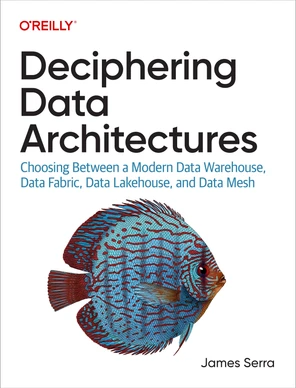
Book overview
A look at the structure and key facts of the book

Publication date
February 7, 2024

Edition
1 edition

Total chapters
16 chapters

Total pages
278 pages

Level
Intermediate to advanced

Data fabric, data lakehouse, and data mesh have recently appeared as viable alternatives to the modern data warehouse. These new architectures have solid benefits, but they're also surrounded by a lot of hyperbole and confusion. This practical book provides a guided tour of these architectures to help data professionals understand the pros and cons of each.
James Serra, big data and data warehousing solution architect at Microsoft, examines common data architecture concepts, including how data warehouses have had to evolve to work with data lake features. You'll learn what data lakehouses can help you achieve, as well as how to distinguish data mesh hype from reality. Best of all, you'll be able to determine the most appropriate data architecture for your needs. With this book, you'll:
- Gain a working understanding of several data architectures
- Learn the strengths and weaknesses of each approach
- Distinguish data architecture theory from reality
- Pick the best architecture for your use case
- Understand the differences between data warehouses and data lakes
- Learn common data architecture concepts to help you build better solutions
- Explore the historical evolution and characteristics of data architectures
- Learn essentials of running an architecture design session, team organization, and project success factors
Free from product discussions, this book will serve as a timeless resource for years to come.
Browse this section to get a quick overall picture of the book's content.
Comparative Analysis of Modern Data Architectures
This book provides a comprehensive comparison of contemporary data architectures, including data fabric, data lakehouse, and data mesh, against the backdrop of the evolving modern data warehouse. It delves into the unique characteristics, strengths, and weaknesses of each approach, helping data professionals understand their fundamental differences. The discussion covers how traditional data warehousing has adapted to integrate with data lake features, offering insights into their historical evolution. Readers will gain a clear perspective on the various architectural paradigms available today.
Practical Application and Strategic Selection
The book guides readers through the practical considerations of implementing and selecting the most suitable data architecture for their specific use cases. It emphasizes distinguishing between theoretical concepts and real-world applicability, particularly in areas like data mesh where hype can obscure practical realities. Furthermore, it covers essential aspects of project success, such as conducting effective architecture design sessions, optimizing team organization, and identifying critical success factors. This ensures that readers are equipped not just with knowledge of architectures, but also with the strategic tools to deploy them successfully.
The authors behind this book are among the most prominent experts and pioneers of their field. Their work is the result of years of hands-on experience, deep research and collaboration with the world's largest technology organizations and companies.Each of these authors, through specialist books and articles, has played an important role in shaping and advancing technical knowledge worldwide.

Comments
Readers' experience with this book - comments from buyers and other users
16 chapters in production
Reading time
07:29
Book type
Subscription
Participants
Be the first
Last updated
Sep 30, 2026