

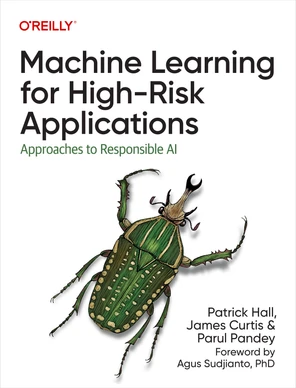
Book Machine Learning for High-Risk Applications
The past decade has witnessed the broad adoption of artificial intelligence and machine learning (AI/ML) technologies. However, a lack of oversight in their widespread implementation has resulted in some incidents and harmful outcomes that could have been avoided with proper risk management. Before we can realize AI/ML's true benefit, practitioners must understand how to mitigate its risks. This book describes approaches to responsible AI—a holistic framework for improving AI/ML technology, business processes, and cultural competencies that builds on best practices in risk management, cybersecurity, data privacy, and applied social science. Authors Patrick Hall, James Curtis, and Parul Pandey created this guide for data scientists who want to improve real-world AI/ML system outcomes for organizations, consumers, and the public.
Book chapters
Browse the chapters to quickly get to know the structure and content of the book.
By browsing the chapters of this book you can quickly see what each part teaches, how the whole is structured and where to start. Each chapter focuses on one concept or skill, and you see its main topics so your choice is more informed. Whether you follow the whole book or just one part, this view helps you find your way.
I. Theories and Practical Applications of AI Risk Management
This part explores the theoretical foundations and practical frameworks for managing risk in AI systems. The primary focus is on understanding the legal landscape, organizational culture, and technical processes necessary to mitigate risks.
Contemporary Machine Learning Risk Management
Interpretable and Explainable Machine Learning
Debugging Machine Learning Systems for Safety and Performance
Managing Bias in Machine Learning
Security for Machine Learning
II. Putting AI Risk Management into Action
This part focuses on the practical aspects and implementation of risk management techniques. Through coding examples and case studies, readers learn how to interpret, debug, and secure their models against attacks.
Explainable Boosting Machines and Explaining XGBoost
Explaining a PyTorch Image Classifier
Selecting and Debugging XGBoost Models
Debugging a PyTorch Image Classifier
Testing and Remediating Bias with XGBoost
Red-Teaming XGBoost
III. Conclusion
This final part summarizes the key principles for success in high-risk AI projects and emphasizes the importance of the scientific method and external standards.
How to Succeed in High-Risk Machine Learning
12 chapters in production
Reading time
14:40
Book type
Subscription
Participants
Be the first
Last updated
Sep 30, 2026