

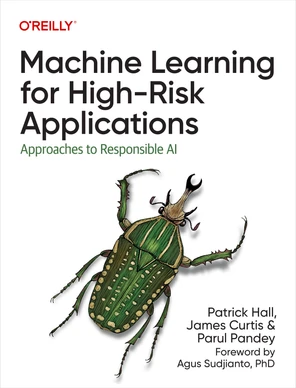
Book Machine Learning for High-Risk Applications
The past decade has witnessed the broad adoption of artificial intelligence and machine learning (AI/ML) technologies. However, a lack of oversight in their widespread implementation has resulted in some incidents and harmful outcomes that could have been avoided with proper risk management. Before we can realize AI/ML's true benefit, practitioners must understand how to mitigate its risks. This book describes approaches to responsible AI—a holistic framework for improving AI/ML technology, business processes, and cultural competencies that builds on best practices in risk management, cybersecurity, data privacy, and applied social science. Authors Patrick Hall, James Curtis, and Parul Pandey created this guide for data scientists who want to improve real-world AI/ML system outcomes for organizations, consumers, and the public.
Book preface
Before you start, a short look at what you will learn in this book
In the preface, settle the general questions you have at a glance, so your view widens and your choice is more informed. Questions such as: Why was this book written and what problem does it solve? Who can use the book? A summary of the chapters and the learning goals of each part? The important changes and new improvements added across editions, and so on — we cover all of these for you.
Target audience
Data scientists who want to improve real-world AI/ML system outcomes.
Technical managers and risk professionals responsible for overseeing AI projects.
Developers who want to learn the ethical and technical principles of responsible AI.
System analysts looking for practical tools to debug and test machine learning models.
Why the book was written
This book is written to bridge the gap between the rapid adoption of AI and the critical need for responsible risk management.
The authors provide a holistic framework to help practitioners avoid harmful outcomes resulting from AI systems.
The work is built upon best practices in cybersecurity, data privacy, and applied social science.
The book serves as a practical guide for implementing emerging standards such as the NIST AI Risk Management Framework.
Content overview
This book is an essential resource for understanding the technical and organizational challenges in deploying high-risk AI.
The authors' practical approach in combining risk management theory with coding examples sets it apart from other resources.
The case studies provided in the book offer deep insights into real-world AI failures and the lessons learned.
The work effectively balances the need for innovation with the necessity of adhering to safety standards.
12 chapters in production
Reading time
14:40
Book type
Subscription
Participants
Be the first
Last updated
Sep 30, 2026